
Information on Clinical Trial Service: Trans epidermal Water Loss (TEWL) Evaluation
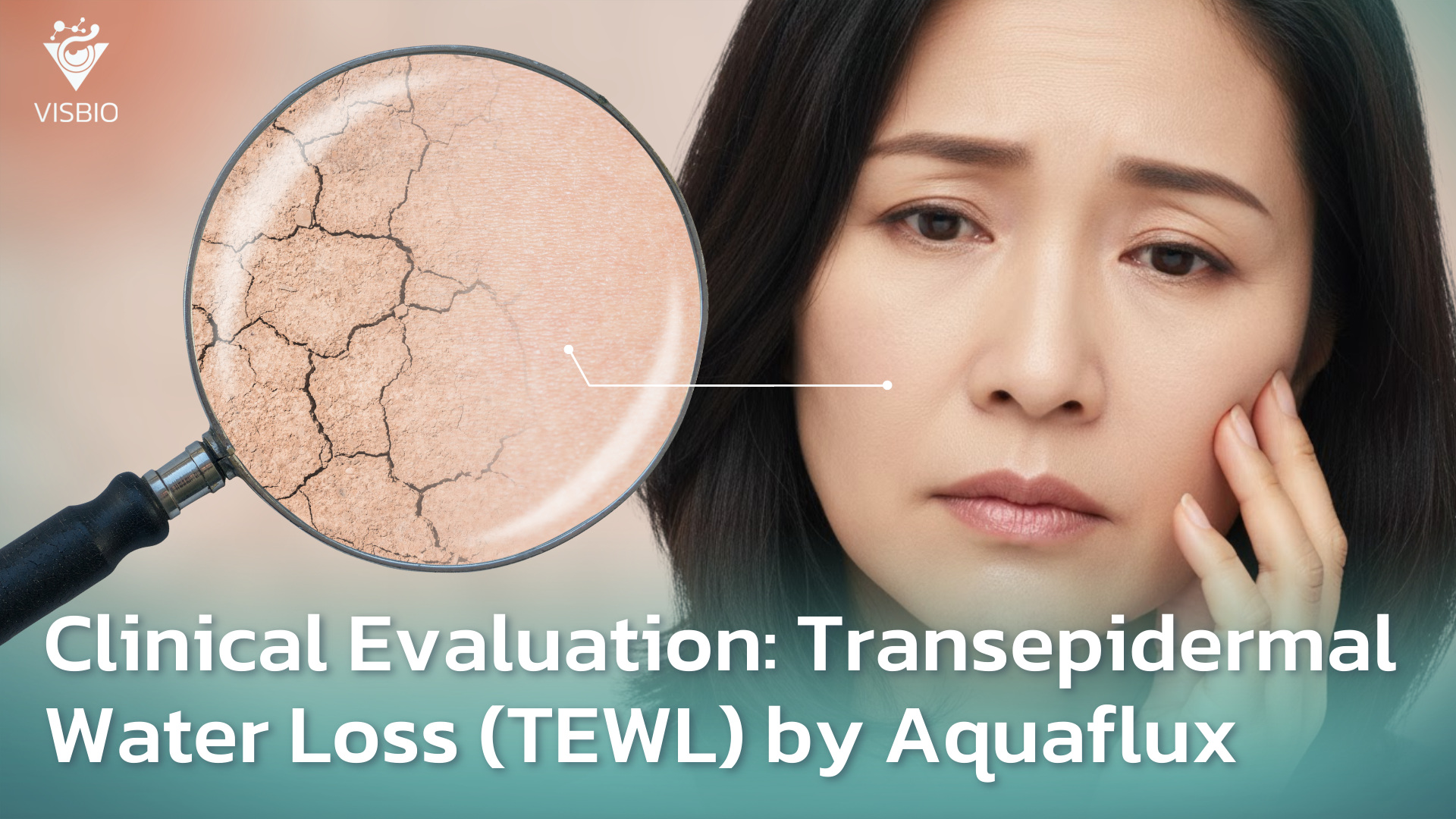
In today’s market, skincare products that help maintain moisture and protect the skin from Trans Epidermal Water Loss (TEWL) are highly sought after. TEWL testing is a method used to evaluate the effectiveness of skincare products by measuring the loss of water from the skin through evaporation. This allows both manufacturers and consumers to assess whether the products used are effective in maintaining skin moisture.
Visbio Co., Ltd. offers advanced and highly accurate TEWL testing services using a device called Tewameter, which can precisely measure TEWL. This test is part of our clinical trial services, which can be used to evaluate the effectiveness of products in protecting and retaining moisture in the skin.
Importance of TEWL Testing
TEWL occurs when water is lost from the skin to the environment. Several factors can contribute to increased TEWL, such as using products that fail to protect the skin from water loss or exposure to dry and harsh environmental conditions. TEWL testing helps us understand how well a product protects and retains moisture within the skin.
Excessive TEWL can lead to dry skin, reduced elasticity, irritation, or sensitivity. Furthermore, it may cause premature wrinkles. Therefore, TEWL testing is an essential tool in evaluating the moisturizing effects of the products used.
Causes of Trans epidermal Water Loss
TEWL is caused by the evaporation of water from the skin, and it can be influenced by several factors:
- Dry Environments: Dry or cold air causes increased evaporation of water from the skin, as the moisture in the air is low.
- Use of Inadequate Products: Certain skincare products may increase TEWL, such as products with harsh chemicals or solvents that damage the skin’s protective layer.
- Skin Damage: Skin that has been damaged by harsh products like alcohol-based cosmetics or certain chemicals may lead to higher water loss.
- Medical Conditions: Conditions like eczema or other dermatological diseases may reduce the skin’s ability to retain moisture.
Ingredients That Help Prevent Trans epidermal Water Loss
Skincare products focused on reducing TEWL must contain ingredients that help create a protective barrier to retain moisture within the skin. Here are some commonly used ingredients in skincare products to prevent water loss:
- Hyaluronic Acid
Function: Hyaluronic acid helps the skin retain moisture by absorbing water up to 1000 times its weight. It helps keep the skin hydrated.
- Ceramides
Function: Ceramides are lipids that reinforce the skin’s barrier by preventing water loss. They play a vital role in maintaining the skin’s protective barrier and moisture retention.
- Glycerin
Function: Glycerin is a humectant that draws moisture from the air into the skin, helping it retain hydration for longer periods.
- Fatty Acids
Function: Fatty acids, such as omega-3 and omega-6, help reinforce the skin’s barrier and reduce water loss. - Dimethicone
Function: Dimethicone is a silicone compound that creates a thin film on the skin, preventing moisture evaporation.
Clinical Trial Service: Trans epidermal Water Loss (TEWL) Evaluation
The Tewameter device is used for TEWL testing. It is a high-precision instrument that measures the rate of water loss from the skin. Tewameter provides accurate and detailed data, allowing us to assess the effectiveness of skincare products in protecting and retaining moisture.
Evaluation Procedure
Benefits of Trans epidermal Water Loss (TEWL) Evaluation Service
- Moisturizing Effect Testing: TEWL testing helps accurately determine how effective a product is at maintaining skin hydration and identifying products that genuinely enhance skin moisture.
- Skin Protection Testing: This test shows how well a product protects the skin from water loss, improving skin elasticity and preventing dryness.
- Moisture Retention Testing: Helps evaluate how well a product helps the skin retain moisture, ensuring hydration and healthy skin throughout the day.
- Product Efficacy Testing: TEWL testing can assess a product’s overall performance, such as improving hydration, reducing moisture loss, and increasing skin elasticity.
Literature:
- Zhu Y, et al. (2019). The Role of Hyaluronic Acid in Moisturizing the Skin. Journal of Cosmetic Dermatology, 18(3), 865–871.
- Madison KC. (2003). Barrier Function of the Skin: “La Raison d’Être” of the Epidermis. Journal of Investigative Dermatology, 121(2), 231–241.
- Yarosh DB, et al. (2002). The Benefits of Glycerin for Skin Care. Cosmetic Dermatology, 14(4), 18–23.
- Micallef MA, et al. (2009). Omega-3 and Omega-6 Fatty Acids in Skin Care. Journal of Lipid Research, 50(5), 1077–1084.
- Barel AO, et al. (2002). Evaluation of the Effectiveness of Dimethicone in Preventing Water Loss from Skin. Dermatology Research and Practice, 4(2), 45–49.