

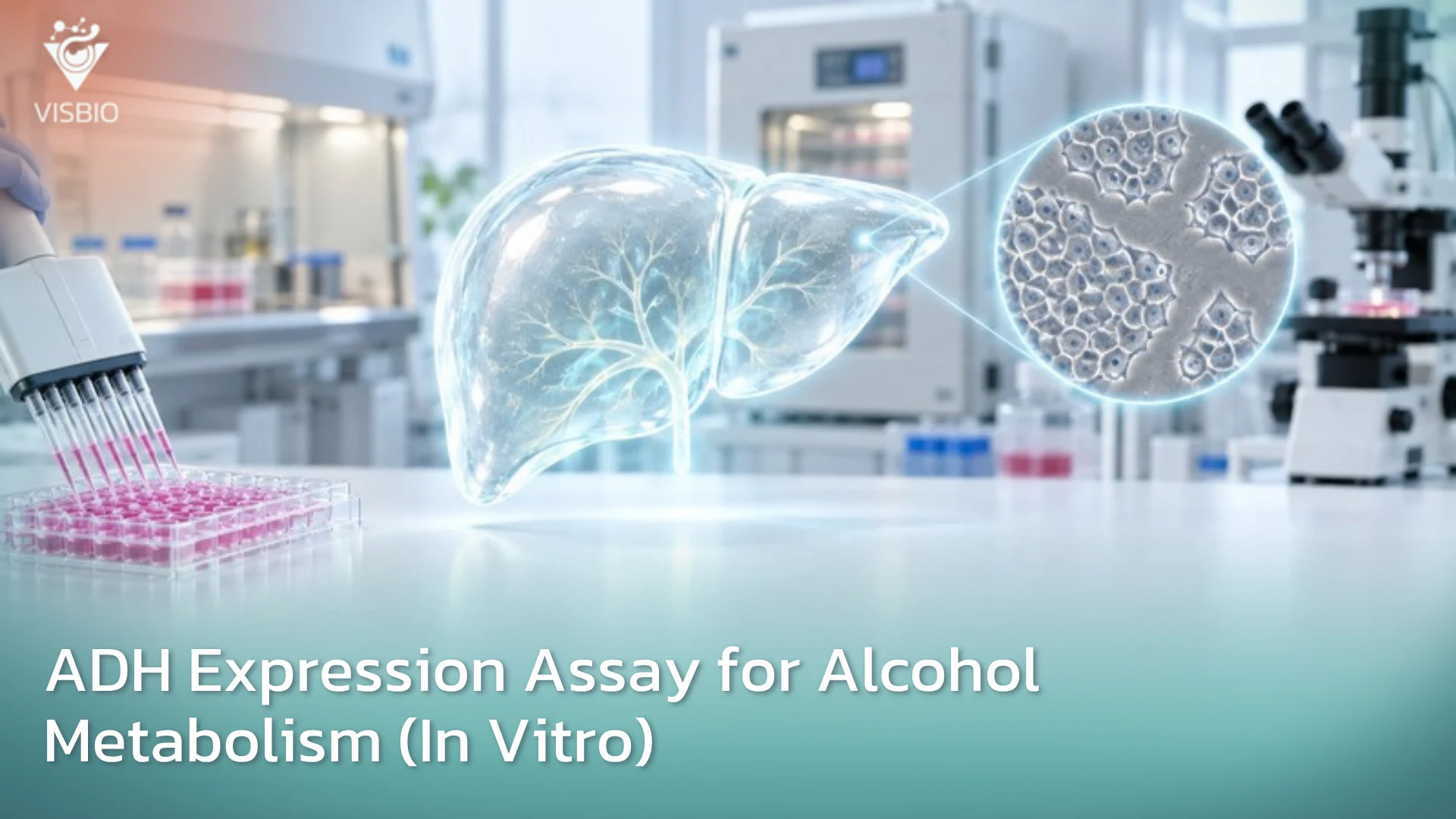
About Our Alcohol Dehydrogenase (ADH) Expression Testing
VISBIO Co., Ltd. offers cell-based testing of alcohol dehydrogenase (ADH) enzyme expression in cultured HepG2 liver cells. The test can be applied to many types of samples, including herbs, extracts, drugs, herbal products, dietary supplements and beverage products.
ADH expression is a key factor in alcohol metabolism and is attracting interest from manufacturers and brand owners as a potential biomarker for health product development. Understanding ADH expression and applying the test data in product development opens up opportunities to create products for health-conscious consumers with diverse lifestyles. ADH levels help explain why people differ in their capacity to metabolize alcohol, and this information can guide the development of products intended to support liver function and relieve hangover symptoms.
The Importance of Alcohol Dehydrogenase
Alcohol, or ethanol, is found in all kinds of alcoholic beverages and is also used in many industries. Once consumed, alcohol is rapidly absorbed into the bloodstream and distributed throughout the body. Alcohol metabolism is essential for eliminating it from the body, and the ADH enzyme plays a central role in this process, with consequences for health.
Alcohol Metabolism in the Body
A healthy person can metabolize no more than about 160-180 g of alcohol per day. Alcohol is metabolized mainly in liver cells, through three main pathways:
- The alcohol dehydrogenase (ADH) pathway, which takes place in the cytosol of liver cells
- The microsomal ethanol oxidizing system (MEOS), which operates in the endoplasmic reticulum of the liver
- The catalase pathway, located in the peroxisomes of liver cells. All three pathways produce acetaldehyde, a toxic compound that harms the body.
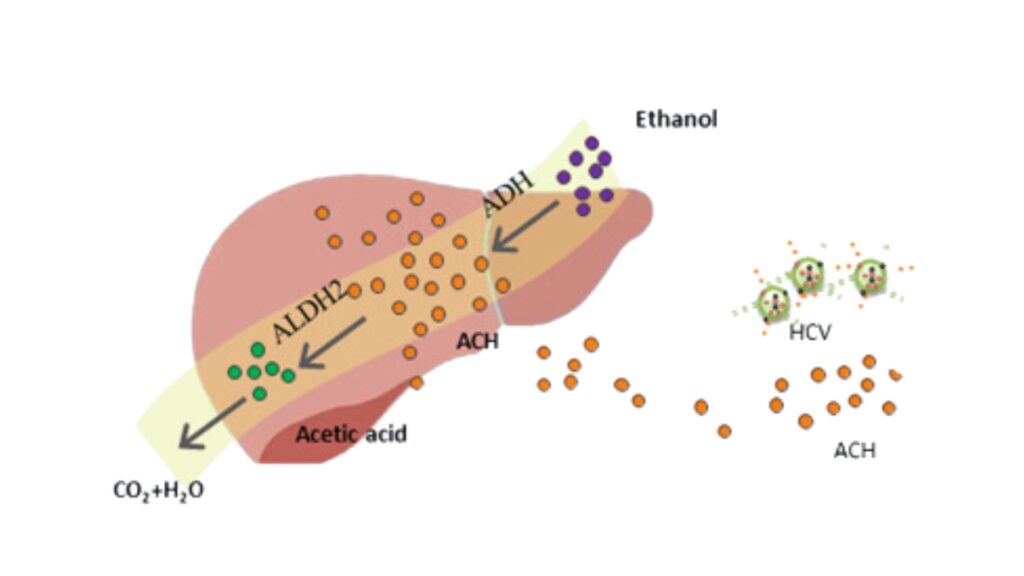
Alcohol metabolism begins in the stomach, where gastric ADH converts part of the alcohol during first-pass metabolism. Some drugs, such as aspirin and H2 blockers, can inhibit ADH in the stomach lining and so reduce alcohol metabolism there. Women, especially premenopausal women, have also been found to have less gastric alcohol dehydrogenase than men, which is one reason alcohol reaches the liver more readily in women.
Alcohol absorbed into the portal circulation is broken down by liver cells through the ADH pathway, which converts alcohol to acetaldehyde; this is then converted further to water and carbon dioxide. The alcohol dehydrogenase pathway in the liver raises NADH production in liver cells, promoting the formation of fatty acids and ketones, raising serum ketone levels and increasing the NADH/NAD ratio. It also increases alpha-glycerophosphate, which combines with fatty acids to form triglycerides that accumulate in the liver and blood, leading to fatty liver. Higher triglyceride accumulation in the liver increases fatty acid metabolism and oxygen use, which can cause anoxic injury to perivenular hepatocytes, a region with high oxygen demand.

Genetic Variation in ADH and Its Effect on Alcohol Metabolism
Humans have several ADH genes, and the enzymes they encode differ in their capacity to metabolize alcohol. Because of this genetic variation, people differ in their ability to metabolize alcohol. Some people metabolize alcohol faster than others, which alters their risk of alcohol-related effects. For example, some East Asian populations are more likely to carry the ADH1B*2 allele, which confers high ADH enzyme activity; as a result, acetaldehyde builds up readily and adverse reactions occur when they drink alcohol.

Benefits of Alcohol Metabolism Testing for Product Development
Alcohol metabolism testing can be an important tool for developing herbal products, natural extracts, drugs, beverages and dietary supplements intended to support liver health and reduce the effects of drinking, including hangover symptoms.
Health is a priority for many people today. Moderate drinking may be part of many people’s lifestyles, but careless drinking can harm the liver, the key organ in alcohol metabolism. Alcohol metabolism testing is therefore key to uncovering the potential of Thai herbs and developing products that support liver health. With this testing, the most promising herbs and herbal varieties can be selected and developed into dietary supplements, drugs and extracts that meet the needs of today’s consumers, whether they drink regularly, want to look after their liver or want to reduce the effects of social drinking.
Alcohol Dehydrogenase Expression Test Method
Alcohol dehydrogenase expression is tested by Quantitative Real-Time PCR in cultured HepG2 human liver cancer cells. RNA is extracted from the HepG2 cells, and ADH1A gene expression in HepG2 cells not exposed to ethanol (control group) is compared with that in HepG2 cells treated with ethanol (EtOH) and the test sample. Results are calculated as percentage ADH1A gene expression (mRNA relative expression).
Literature:
- แอลกอฮอล์ : III. โรคตับ จากการดื่มแอลกอฮอล์ (in Thai)
- Edenberg, H. J. (2007). The genetics of alcohol metabolism: role of alcoholdehydrogenase and aldehydedehydrogenase variants. Alcohol Research & Health, 30(1), 5-13.
- World Health Organization. (2018). Global status report on alcohol and health 2018. World Health Organization.