

About Our Immune Support Testing
VISBIO Co., Ltd. offers immune support (immunostimulatory activity) testing for a wide range of samples. This test plays an important role in developing health products across many industries, including health and beauty, food and beverages, and pharmaceuticals.
The test is based on measuring the amount of nitrite released by macrophage cells, which indicates the immune system’s ability to fight pathogens. The more a test substance stimulates macrophages to produce nitrite, the greater its potential to support immunity may be.
Our testing gives manufacturers evidence on the immune-supporting potential of their products. This can add value to a product and is an important step in developing quality health products that meet the needs of today’s consumers.
Immune Support Activity
Immune support activity is the ability of a substance or process to enhance the function of the body’s immune system, helping the body fight pathogens and other foreign substances more effectively.
Immune support can work through several mechanisms, for example:
- Activating immune cells: some substances can stimulate the proliferation and activity of white blood cells such as macrophages, T cells and B cells, which play a key role in fighting pathogens.
- Increasing the production of immune molecules: some substances can stimulate the production of antibodies, cytokines and other molecules that help eliminate pathogens and regulate inflammation.
- Balancing the immune system: in some cases an overactive immune response can harm the body, so some substances help modulate immune function, with the aim of preventing allergies and autoimmune diseases.
The Role of Macrophages and Nitrite
Macrophages are white blood cells that play a key role in both innate (immediate) and adaptive (specific) immune responses. They act as direct killers, engulfing and destroying pathogens, bacteria, dead cells and other foreign material. They also act as antigen-presenting cells, using fragments of destroyed pathogens to activate other immune cells and initiate a specific response to the pathogen.
Nitrite is a molecule linked to the pathogen-killing activity of macrophages. Activated macrophages produce nitric oxide (NO), which is rapidly converted to nitrite. NO can destroy pathogens and infected cells: it can damage bacterial cell walls, damage pathogen DNA and disrupt pathogen metabolism. NO also helps regulate inflammation and immune responses.
The link between macrophages and nitrite is therefore an important part of the immune system’s defense against pathogens. The amount of NO that macrophages produce indicates their pathogen-killing capacity and is a key parameter for evaluating substances with potential immunostimulatory activity.
Factors Affecting Immunity
Many everyday factors affect the body’s immunity, including diet, medicinal herbs, medicines and daily activities. Examples include:
- Food and nutrients: a healthy, balanced diet is the foundation of good health and a well-functioning immune system.
- Medicines and vaccines: a specific and highly effective way to strengthen immunity. Vaccines stimulate the body to build immunity against specific pathogens, while some medicines may have immune-enhancing effects as a side effect.
- Exercise: regular moderate exercise, such as brisk walking, jogging or swimming, improves blood circulation and stimulates immune cell activity.
- Sleep and rest: adequate sleep is essential for the body’s recovery and repair, including the immune system. Sleep deprivation or insufficient rest can weaken the body and increase the risk of infection.

Dietary Components That Affect Immunity
Several key nutrients and compounds help support immunity, including:
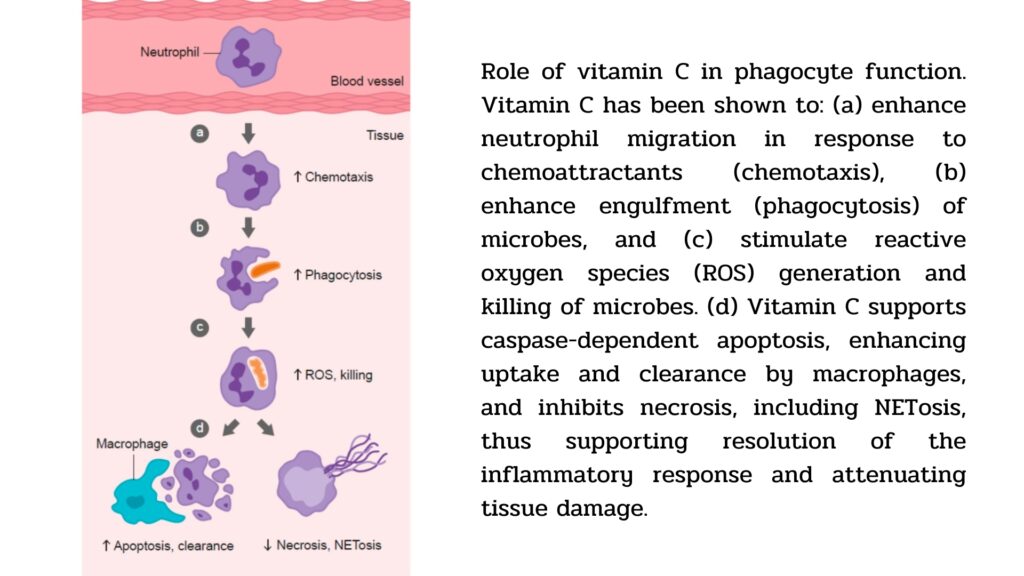
- Vitamin C: an antioxidant that helps protect immune cells from damage and supports white blood cell function. It is abundant in citrus fruits, green leafy vegetables and chili peppers.
- Vitamin D: helps regulate immune function. The body makes vitamin D when the skin is exposed to sunlight, and it is also found in some foods, such as oily fish, egg yolks and milk.
- Zinc: essential for the growth and function of immune cells. It is abundant in seafood, meat, legumes and grains.
- Probiotics: live microorganisms that, when consumed in adequate amounts, confer a health benefit. They are believed to help balance the gut microbiota, which influences immune function, and are found in yogurt, fermented milk, kimchi and some other fermented foods.
- Plant extracts: some plant extracts, such as garlic, ginger and ginseng extracts, may have immune-enhancing activity according to some studies.
Indicators of Immunostimulatory Potential
Studies of immune-enhancing activity commonly use macrophages as a cell model, because these cells play a central role in immune responses and produce nitric oxide (NO), a pathogen-killing molecule that is rapidly converted to the stable end product nitrite.
Measuring the nitrite released by macrophages is therefore one way to evaluate a test substance’s potential to stimulate the immune system. If a test substance stimulates macrophages to produce more nitrite, this may indicate immune-enhancing potential.
Immune Support Testing Method
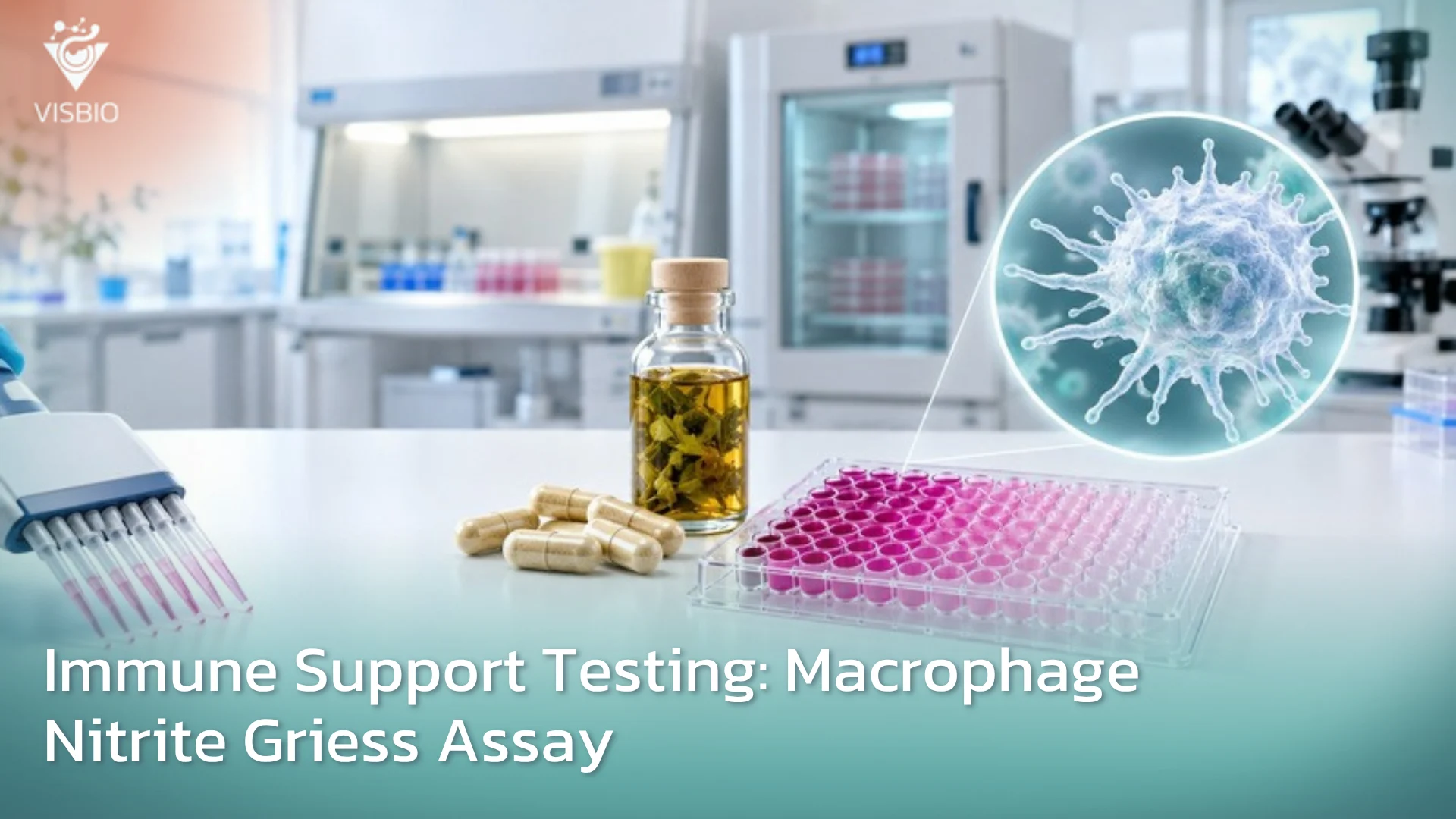
Our laboratory tests the immune support activity of samples using the Griess test, a widely used method for measuring nitrite. In this test, nitrite reacts with specific reagents to form a pinkish-purple compound, which is quantified by measuring absorbance with a microplate reader. The intensity of the pinkish-purple color is proportional to the amount of nitrite, and the readings are compared with a nitrite standard curve to determine the amount of nitrite released by the test cells. The more nitrite produced, the more intense the color and the higher the absorbance, which may indicate a greater potential of the sample to stimulate the immune system.
For these reasons, measuring nitrite production by macrophages with the Griess test is an effective tool for screening and evaluating substances with potential immune-enhancing activity, an important step in the future development of dietary supplements, medicines or vaccines.
Literature:
- Carr, A. C., & Maggini, S. (2017). Vitamin C and Immune Function. Nutrients, 9(11), 1211.
- Aranow, C. (2011). Vitamin D and the immune system. Journal of investigative medicine : the official publication of the American Federation for Clinical Research, 59(6), 881–886.
- Mosser, D. M., & Edwards, J. P. (2008). Exploring the full spectrum of macrophage activation. Nature reviews. Immunology, 8(12), 958–969.
- Bogdan, C. (2001). Nitric oxide and the immune response. Nature immunology, 2(10), 907–916.