

About Our Melatonin-Like Activity Assay (HEK293T Cell Model)
VISBIO Co., Ltd. offers a melatonin-like activity assay in the standard HEK293T cell model to test for active substances with melatonin-like activity. The assay can be applied to products from the health and beauty, food and beverage, herbal and medical industries.
Melatonin is a molecule found widely in nature. Besides being a hormone produced centrally by the pineal gland of vertebrates, it is also synthesized in many other cells and tissues. In mammals, pineal melatonin synthesis is timed by the suprachiasmatic nucleus, which is synchronized with the light–dark cycle through the retinohypothalamic tract, so that melatonin is produced at night. Melatonin production in the pineal gland is controlled by the nervous system and proceeds through several chemical steps, from tryptophan to serotonin and finally to melatonin. Melatonin has several important roles in the body: it acts as an antioxidant, reduces cAMP-PKA-CREB and cGMP signaling, acts through melatonin receptors on cells, and regulates the clock genes that set biological timing. Melatonin is also involved in regulating energy metabolism, immune responses, body heat production, growth and body weight.
About Melatonin
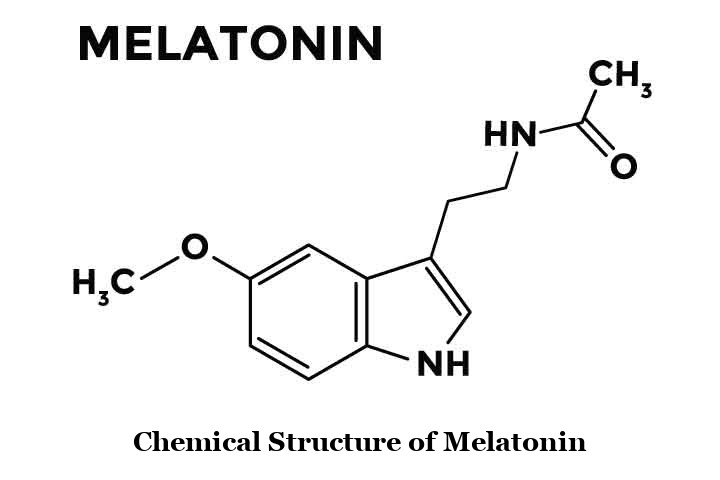
Melatonin, chemically N-acetyl-5-methoxytryptamine, is an indoleamine. It is a hormone produced from the amino acid tryptophan by an endocrine gland called the pineal gland. Melatonin promotes sleepiness, and low melatonin secretion can lead to insomnia. The body secretes melatonin at night.
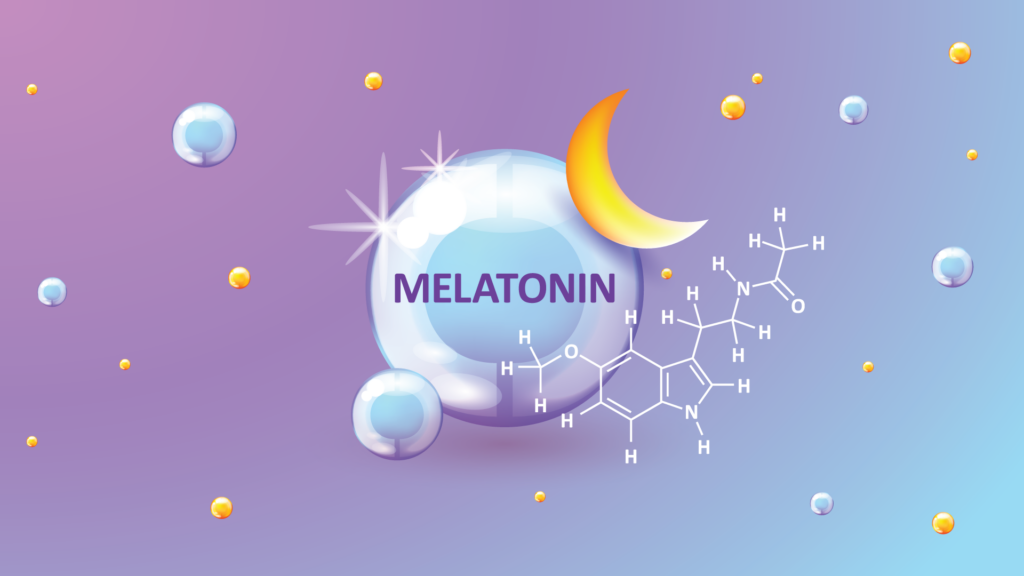
Secretion peaks at around 02:00–04:00, then declines steadily and stops at around 07:00–08:00. Darkness stimulates melatonin secretion, whereas light inhibits it. Studies have found that blue light from mobile phone screens delays melatonin secretion, and melatonin secretion also tends to decline in older adults, who are therefore more prone to insomnia.
In medicine, melatonin given as a dietary supplement or as a drug in tablet, capsule or sublingual form can help people fall asleep more easily. It is suited to sleep problems that are not caused by psychiatric conditions, such as insomnia, difficulty falling asleep, or sleeping at irregular times, for example because of shift work. Because it helps regulate the body’s biological clock, it can also help reduce jet lag after long-haul travel. Melatonin has other effects in the body as well, including antioxidant and anti-inflammatory activity and support for the immune system.
In Thailand, melatonin is registered as a medicine with restricted supply: it can be sold only in pharmacies or dispensed on a doctor’s prescription. Melatonin is generally considered relatively safe when used according to the label or a doctor’s advice, but it can cause side effects such as drowsiness or headache. Users should therefore avoid driving and other high-risk work, and melatonin should be used with caution in people with autoimmune diseases or epilepsy, people with liver or kidney problems, and pregnant or breastfeeding women.
How Melatonin Synthesis Is Stimulated
Melatonin is synthesized by cells called pinealocytes in the pineal gland. Its synthesis is controlled by a neural pathway that originates in the paraventricular nucleus of the hypothalamus (hypothalamic paraventricular nuclei) and projects, directly and indirectly, to preganglionic sympathetic neurons in the spinal cord. The signal is relayed to postganglionic sympathetic neurons in the superior cervical ganglion in the neck, whose nerve fibers, the conary nerves (nervi conarii), reach the pineal gland, as shown in Figure 2.
When norepinephrine is released from these sympathetic nerve terminals, it binds to noradrenergic receptors on the pinealocyte membrane. This activates the cAMP-PKA-CREB and PLC-Ca++-PKC pathways in the cell, which triggers melatonin synthesis.
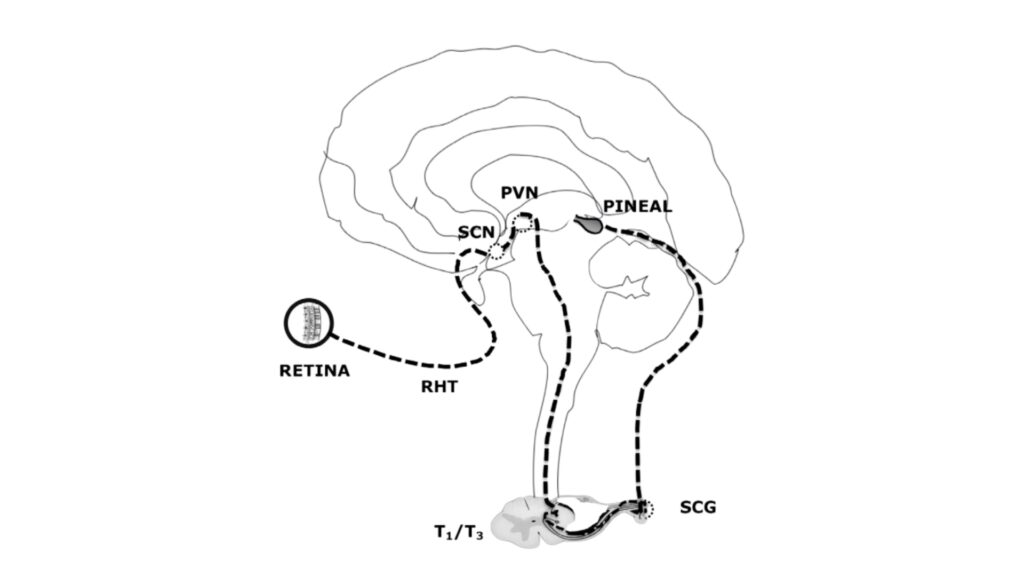
Figure 2. Neural control of pineal melatonin synthesis. RHT: retinohypothalamic tract. SCN: suprachiasmatic nucleus. PVH: paraventricular nucleus. SCG: superior cervical ganglion.
Melatonin synthesis begins with tryptophan, which is converted to 5-hydroxytryptophan by tryptophan hydroxylase and then to serotonin. Serotonin is acetylated by arylalkylamine N-acetyltransferase (AANAT) to form N-acetylserotonin (NAS), which is then converted to melatonin by acetylserotonin O-methyltransferase (ASMT), formerly called hydroxyindole-O-methyltransferase (HIOMT). These three enzymes are regulated by the nervous and endocrine systems, which control the timing and amount of melatonin produced. The pathway is shown in Figure 3.
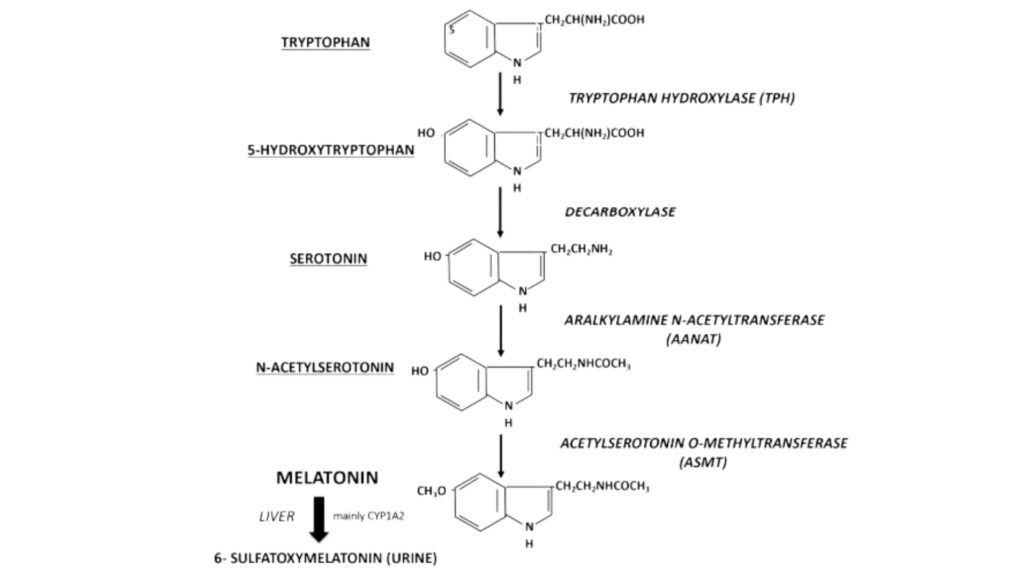
Figure 3. Melatonin synthesis pathway and hepatic metabolization. The enzymes are written in italic and the derived molecules are underlined.
Testing Melatonin-Like Activity in HEK293T Cells
The melatonin-like activity assay in the standard HEK293T cell model is a cell-based test that combines 2D cell culture with an enzymatic assay. Our specialists culture HEK293T cells in T-75 flasks in a humidified incubator at 37 °C with 5% CO2, changing the culture medium every 3 days. When the cells reach 80–90% confluence, they are transferred to a 96-well plate. A cAMP reagent is added and the plate is incubated at room temperature for 2 hours, after which the test sample is added and incubated at room temperature for about 5–10 minutes. Luminescence is then measured to quantify the cAMP produced (%cAMP production).
Example of a Melatonin-Like Activity Report

Graph showing the %cAMP produced with a commercially available melatonin capsule product (10 mg melatonin per 250 mg capsule).
Literature:
- บทความสุขภาพ เมลาโทนิน ช่วยให้นอนหลับได้จริงหรือ?, โรงพยาบาลศิริราช ปิยะมหาราชการุณย์ (in Thai)
- บทความเผยแพร่ความรู้สู่ประชาชน เมลาโทนิน ตัวช่วยนอนหลับยอดฮิต, คณะเภสัชศาสตร์ มหาวิทยาลัยมหิดล (in Thai)
- กรนิกา ยานการ , อารยา องค์เอี่ยม , พงศ์ธารา วิจิตเวชไพศาล, เมลาโทนินเหมาะสมหรือยังที่จะนำมาใช้ในวิสัญญี, วิสัญญีสาร 2562; 45(2). (in Thai)
- วริยา โฮชิน, อนุชิตา มุ่งงาม, เมลาโทนินและฤทธิ์การต้านอนุมูลอิสระในผักจากท้องถิ่น, แก่นเกษตร 45 ฉบับพิเศษ 1 : (2560). (in Thai)
- พิชญา โพธินุช, ศศิธร ตรงจิตภักดี, การสกัดและวิเคราะห์เมลาโทนินในสมุนไพรไทย, เรื่องเต็มการประชุมทางวิชาการของมหาวิทยาลัยเกษตรศาสตร์ ครั้งที่ 48: สาขาอุตสาหกรรมเกษตร. กรุงเทพฯ. 2553. หน้า 562-569. (in Thai)
- ปัญญดา ปัญญาทิพย์, ปิยะสดุา โทสวนจิตร, สุธาสินี ทัพพสารพงศ์, ปราโมทย์ มหคุณากร, เพลินทิพย์ ภูทองกิ่ง, บรรลือ สังข์ทอง, การวิเคราะห์ปริมาณเมลาโทนินและศึกษาฤทธิ์ทางเภสัชวิทยาของสารสกัดจากใบหม่อน, การประชุมวิชาการและนำเสนอผลงานระดับชาติ The 5 th Annual Northeast Pharmacy Research Conference of 2013. (in Thai)
- Chanchal Bhati , Neha Minocha, Deepika Purohit, Sunil Kumar, Manish Makhija, Sapna Saini, Deepak Kaushik and Parijat Pandey, High Performance Liquid Chromatography: Recent Patents and Advancement Biomedical & Pharmacology Journal, June 2022, Vol. 15(2), p. 729-746.
- Lin, Jian & Zhang, Chunchan & Gao, Yaoxiang & Zhao, Xiaojun & Li, Xican. (2012). A Validated HPLC Method for Determining Melatonin in Capsule Dosage Form. Spatula DD – Peer Reviewed Journal on Complementary Medicine and Drug Discovery, January 2012; 2(3):147.
- Manchester, L.C., D.X. Tan, R.J. Reiter, W. Park, K. Monis and W.B. Qi . 2000. High levels of melatonin in the seeds of edible plants-possible function in germ tissue protection. Life Sci. 67:3023–3029.
- Reiter, R.J., L.C. Manchester, D.X. Tan. 2005. Melatonin in walnuts: Influence on levels of melatonin and total antioxidant capacity of blood. Nutrition. 21: 920-924.
- Fernanda Gaspar do Amaral and José Cipolla-Neto, A brief review about melatonin, a pineal hormone, Arch Endocrinol Metab. 2018;62/4.