

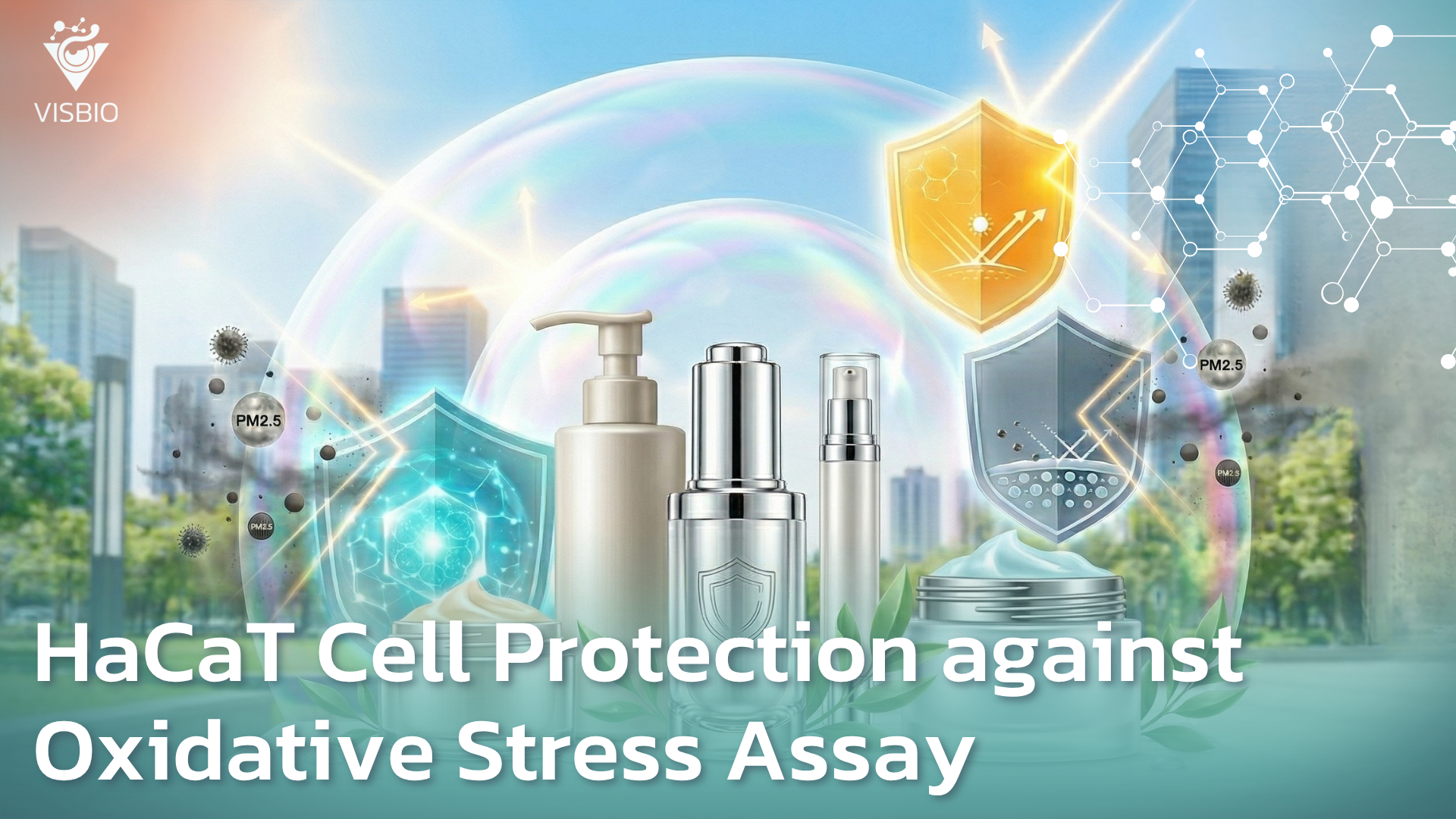
Information about Service for Evaluating Effects on HaCaT Keratinocytes under Oxidative Stress
VISBIO Co., Ltd. specializes in the laboratory-based evaluation of the efficacy of test samples on HaCaT keratinocytes under oxidative stress conditions. This testing service is particularly suitable for products in the health and beauty industry, including creams, serums, botanical extracts, and biologically active ingredients, that require in vitro assessment at the skin-cell level. The assay is designed to determine the extent to which submitted samples influence the maintenance and survival of skin cells when exposed to oxidative stress, which represents one of the fundamental biological mechanisms associated with cellular deterioration and skin damage induced by environmental and external factors.
The HaCaT cell line employed in this assay is a well-established keratinocyte model that has been widely accepted and extensively utilized in dermatological and biological research worldwide. Keratinocytes are the predominant cell population within the epidermis and function directly as the first defensive barrier of the skin. When these cells are exposed to excessive oxidative stress, the intracellular microenvironment and the endogenous protective mechanisms of the skin are adversely affected, resulting in cumulative cellular damage and progressive skin vulnerability. Consequently, numerous scientific studies have employed the HaCaT oxidative stress model to investigate the biological potential of active substances prior to further development toward human clinical evaluation.
What Is Oxidative Stress?
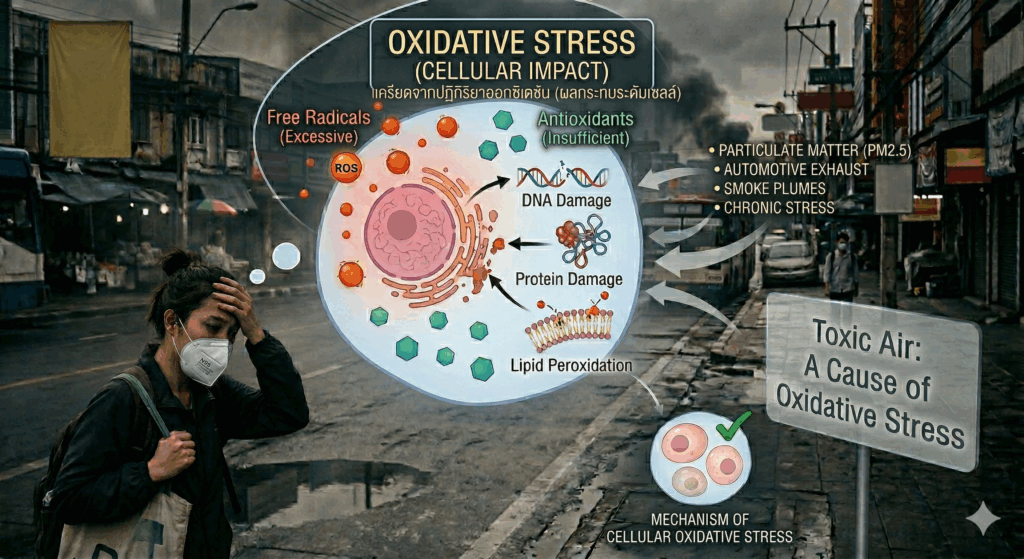
Oxidative stress is a biological condition that arises when reactive oxygen species (ROS) accumulate within cells at levels exceeding the capacity of endogenous antioxidant systems and antioxidant enzymes to neutralize them. Once this imbalance occurs, ROS begin to attack and disrupt essential cellular constituents, including proteins, membrane lipids, and genetic material such as DNA. Although ROS play important roles in normal physiological signaling processes at controlled levels, excessive ROS become deleterious factors that disturb cellular homeostasis and may lead to irreversible cellular injury, particularly in skin tissue, which is continuously exposed to the external environment.
In the context of skin biology, oxidative stress may be induced by multiple environmental factors, including ultraviolet radiation (UV rays), air pollution, particulate matter such as PM2.5, and various exogenous pro-oxidant chemicals. Sustained elevation of ROS within the skin can profoundly alter the intracellular environment, reduce the functional efficiency of antioxidant enzymes, and activate biological processes associated with long-term cellular damage and inflammation.
For this reason, the inhibition or attenuation of oxidative stress has become one of the most important strategic axes in contemporary product development. Skin deterioration caused by free radicals derived from pollution and UV exposure may overwhelm the natural skin defense system, contributing to premature aging, inflammation, and dullness. This assay is therefore intended to demonstrate whether a product may serve as a potential solution to such conditions. The in vitro evaluation of extracts or finished products under simulated oxidative stress conditions provides a critical basis for determining whether a formulation may help compensate for disrupted cellular equilibrium or preserve cells against oxidative damage. Such information constitutes a fundamentally important dataset for efficacy substantiation in the areas of antioxidant, anti-pollution, and anti-aging product concepts.
Significance of Oxidative Stress in Skin Cells
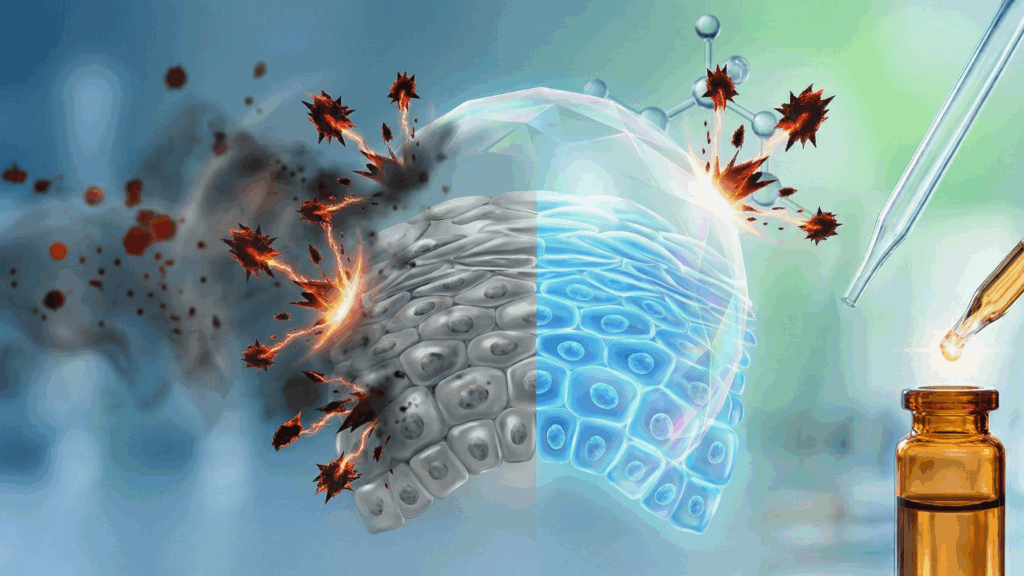
Epidermal skin cells, or keratinocytes, function as the principal structural and protective barrier of the body. The integrity and viability of these cells are therefore essential to overall skin health. When keratinocytes are exposed to severe oxidative stress beyond their physiological threshold, the resulting damage is not limited to the molecular level, but extends to the cutaneous microenvironment, weakening the skin barrier and contributing to dryness, increased sensitivity, irritation, and premature wrinkle formation that is often difficult to reverse.
A substantial number of studies employing H2O2-induced oxidative stress in HaCaT cells have demonstrated that exposure to hydrogen peroxide induces a critical stress condition that leads to a marked reduction in cell viability, or the survival rate of the cells. In addition, significant alterations in the intracellular antioxidant defense system have also been observed under such conditions. These findings reinforce the biological relevance of the HaCaT/H2O2 model as a robust experimental system for investigating sample efficacy against oxidative stress at the cellular level.
Procedure for Evaluating Effects on HaCaT Keratinocytes under Oxidative Stress
The oxidative stress efficacy assay provided by VISBIO is conducted by trained specialists in accordance with internationally recognized research standards. The procedure begins with the cultivation of HaCaT keratinocytes as a representative model of healthy epidermal cells. A critical stage of the workflow is the pre-treatment of the cells with the test sample, whether it is a finished product or an active substance, for a defined period of time. This step is designed to assess whether the sample can prepare, support, or preserve the cells before they are subjected to oxidative challenge. Oxidative stress is subsequently induced using hydrogen peroxide, thereby creating a controlled stress condition to evaluate the actual capacity of the test sample to preserve cellular viability under adverse conditions.
For in-depth endpoint evaluation, VISBIO employs the MTT assay, one of the most internationally recognized standard techniques for monitoring cell survival. The principle of this method is based on the metabolic activity of mitochondria in living cells, which convert the tetrazolium salt MTT into insoluble purple formazan crystals. The intensity of the resulting color is directly proportional to the number of viable cells present. This method is widely used because of its high reliability and analytical robustness. Based on scientific studies using the same experimental system, the HaCaT keratinocyte model challenged with hydrogen peroxide is able to clearly differentiate among the untreated control group, the oxidative stress group, and the group pre-treated with the test sample prior to oxidative challenge. As a result, product developers are able to interpret the assay outcome with confidence. The resulting data are reported as % Cell Viability and may be further calculated as % Protection to compare the efficacy of different formulations under the same standardized conditions. This reporting format is clear, interpretable, and highly useful for both R&D teams in formulation development and marketing teams in communicating evidence-based product performance to consumers.
Benefits of the HaCaT Oxidative Stress Efficacy Testing Service
In the increasingly competitive health and beauty industry, product development based solely on marketing-oriented information is no longer sufficient to establish long-term trust and differentiation. For this reason, our HaCaT oxidative stress efficacy testing service has been designed as a comprehensive scientific tool to support both research and development (R&D) and marketing communication.
- Strategic Ingredient Screening This service enables researchers to identify and select active ingredients that demonstrate measurable efficacy in preserving skin cells under oxidative stress conditions. By comparing quantitative parameters such as % Protection among raw materials from different sources under the same standardized experimental conditions, developers can perform preliminary quality assurance and determine whether the selected ingredient possesses the biological potential required for product development. This approach strengthens early-stage decision-making by providing evidence of bioactivity in a controlled cellular model.
- Formulation and Product Optimization Cell-based testing is an important tool for determining the optimal concentration of bioactive ingredients at which the formulation may exhibit desirable efficacy in preserving or restoring biological balance under cellular stress conditions, without inducing cytotoxicity. Such empirical evidence not only supports more efficient raw material utilization, but also contributes to the establishment of an initial safety profile for both topical formulations and dietary supplement products before subsequent stages of development. This makes the assay highly valuable for optimizing product performance while simultaneously reducing formulation risk.
- Value Creation through Scientific Evidence The data generated from this assay can be translated into powerful scientific storytelling, enabling brands to move beyond generic soft claims toward evidence-based communication supported by quantitative results. Statistically meaningful numerical outcomes can enhance product differentiation, strengthen brand credibility, and position the brand as scientifically competent in the eyes of both consumers and business partners. In this way, laboratory-derived efficacy data become a strategic asset that contributes directly to long-term value creation.
Integrated Efficacy Analysis for Confidence in the Health and Beauty Industry
Product efficacy substantiation should not be limited to promotional claims; rather, it should be built upon systematic and verifiable analytical processes. The foundation begins with the evaluation of cytotoxicity using the MTT assay, in order to identify the concentration range at which an extract or formulation does not exert adverse effects on cells. This step serves as an essential preliminary safety profile for all product categories, including topical cosmetics and ingestible products intended to support health from within.
Once baseline safety has been established, the next critical stage is the evaluation of the capacity of the sample to maintain cell status under a simulated stress condition, namely oxidative stress protection. This model reflects a situation in which the body or the skin is challenged by environmental aggressors such as pollution, radiation, or other oxidative triggers. The resulting % Cell Viability serves as an efficacy-related indicator that reflects the tendency of a product to support cellular resilience under such conditions. These data provide business operators with evidence that may support product positioning in areas such as environmental defense or resilience-oriented skin and body care, both of which are increasingly important concepts for international brand differentiation.
To comprehensively address the current industry emphasis on antioxidant performance, VISBIO additionally integrates Intracellular ROS Assay analysis to quantify reactive oxygen species at the molecular level. This assay provides mechanistic insight into a product’s capacity to reduce ROS accumulation, which is one of the major contributors to progressive cellular deterioration over time. Such in-depth data are not only beneficial to formulation scientists in selecting the most effective components but also serve as a critical gateway for the preparation of credible technical documentation, enhancement of competitive advantage, and reduction of business risk across the entire product development pipeline, from ingredient selection to confident market introduction of high-quality products.
Literature:
- Warinhomhoun, S., Chawanphat Muangnoi, Visarut Buranasudja, Wanwimon Mekboonsonglarp, Pornchai Rojsitthisak, Kittisak Likhitwitayawuid, and Boonchoo Sritularak. “Antioxidant activities and protective effects of dendropachol, a new bisbibenzyl compound from Dendrobium pachyglossum, on hydrogen peroxide-induced oxidative stress in HaCaT keratinocytes.” Antioxidants 10.2 (2021): 252.
- Riss, T. L., Richard A. Moravec, Andrew L. Niles, Sarah Duellman, Hélène A. Benink, Tracy J. Worzella, and Lisa Minor. “Cell viability assays.” Assay Guidance Manual. Bethesda: Eli Lilly & Company and the National Center for Advancing Translational Sciences, 2013, updated 2016.