

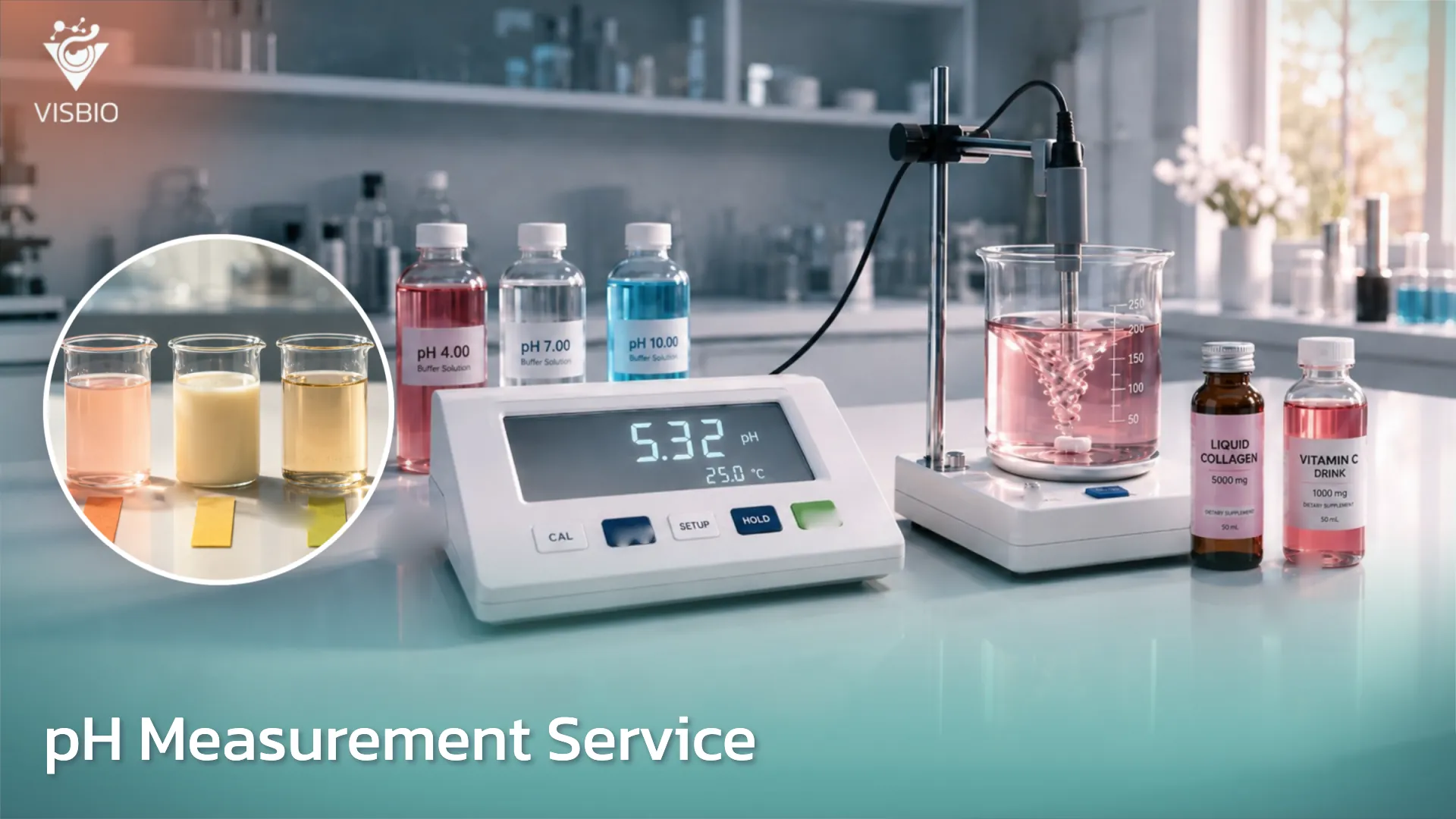
pH, a measure of acidity and alkalinity, is a number that shows how acidic or alkaline a solution or the aqueous phase of a product is. It generally runs from 0 to 14: pH 7 is neutral, values below 7 are acidic and values above 7 are alkaline. pH is a logarithmic scale, so a difference of one unit means a tenfold difference in hydrogen ion concentration.
In cosmetics, liquid dietary supplements and beverages, pH affects several aspects of a product at once: its suitability for the skin, the stability of the formulation, the effectiveness of the preservative system and the stability of bioactive compounds. A pH that drifts by only 0.5–1.0 unit from the value set in the specification can make a product deteriorate faster than designed, or cause quality problems serious enough to require a product recall.
In the hot, humid climate of Thailand and ASEAN, product pH can change over time for several reasons, such as the degradation of weak-acid or weak-base ingredients in the formula, high temperatures during transport, and substances that migrate from the packaging into the product (leachables). A product whose pH is on target on the day of manufacture may therefore drift outside its specification during its shelf life, before consumers notice any problem. Measuring and tracking pH throughout shelf life provides traceable evidence of quality.
VISBIO Laboratory measures pH with a pH meter for cosmetics, liquid dietary supplements, functional drinks, herbal syrups and surfactant-containing products, either as a single measurement for batch release or as repeated measurements during a stability study.
Why pH is an important parameter
In cosmetic formulation, choosing a suitable pH range is the starting point of the design. Human skin generally has a pH of about 4.5–5.5. This mildly acidic outer layer, known as the acid mantle, helps limit the growth of certain pathogens and helps maintain the balance of the skin’s resident microorganisms. Cosmetics with a pH far from this range, such as bar soap at around pH 9–10 or cleansers above pH 8, may disturb the skin’s balance and cause irritation. Under the ASEAN Cosmetic Directive, companies must hold data that support the claimed effects of their cosmetics (ASEAN Cosmetic Committee, 2008). A product that claims to be “skin pH-balanced” should therefore have pH results confirming that it falls within the claimed range. For a “mild” claim, pH can serve as supporting data, but the claim should also be backed by irritation testing such as the Single Patch Test.
In the preservative system, pH directly determines the effectiveness of many preservatives. Weak-acid preservatives such as sorbic acid, benzoic acid and sodium benzoate are active in their undissociated form, which makes up a large share of the preservative at low pH. These preservatives therefore work best below about pH 5, and their effectiveness falls sharply above about pH 6. Phenoxyethanol and parabens work across a wider pH range, but they still have their own optimal range. If a product’s pH drifts during shelf life, the preservative system may become less effective, to the point where microorganisms can grow. This problem is usually invisible until the product starts to change color or develop an unusual odor.
In emulsions and suspensions, pH affects the electrical charge on the surface of oil droplets and solid particles. This charge creates a repulsive force that keeps the particles from clumping together. In systems where the surface charge depends on pH, such as systems that use proteins or ionizable emulsifiers, a change in pH may bring the system close to its isoelectric point, where the net surface charge of the particles is zero. The particles then aggregate easily, which leads to phase separation. Gels and emulsions made with carbomer or other anionic rheology modifiers are especially sensitive to pH changes, because carbomer gives high viscosity when it is neutralized within a suitable pH range. If the pH falls below that range (typically below about 5), the viscosity of the gel drops noticeably and the product becomes runnier.
From a regulatory perspective, pH is quality data that the manufacturer sets in the product specification. Manufacturers should therefore keep measurement results in their quality records, so that they can present them to regulators or buyers on request, under the law for each product type: the Cosmetic Act B.E. 2558 (2015), the Food Act B.E. 2522 (1979) and the Herbal Products Act B.E. 2562 (2019). A product whose pH is outside the specified range fails its quality criteria, and the cause should be investigated before the batch is released. In export markets, some business-to-business (B2B) buyers specify an acceptable pH range on the certificate of analysis (COA), for example ±0.3 unit for buffered formulas and ±0.5 unit for unbuffered formulas, and use it as a release criterion.
Principles of pH measurement and the challenges of real products
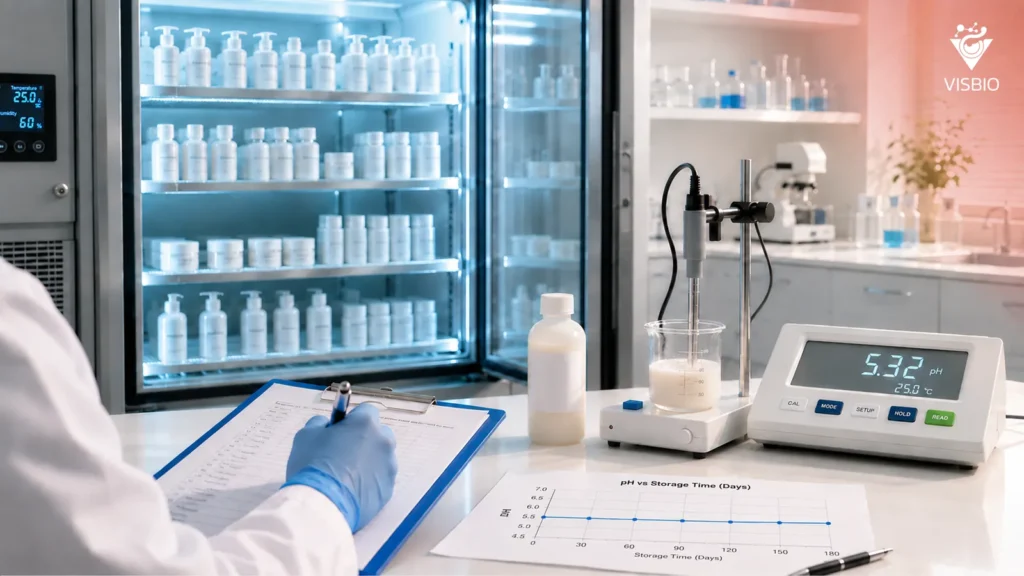
A pH meter measures the electrical potential between a glass electrode that is sensitive to hydrogen ions and a reference electrode, both immersed in the sample. The measured potential changes linearly with pH according to the Nernst equation; the theoretical value at 25 °C is about 59.16 millivolts per pH unit. The meter converts this potential into a pH value (United States Pharmacopeial Convention, 2023). pH is different from titratable acidity, which measures the total amount of acid in a sample, so products with similar pH values can contain different amounts of acid.
Measuring pH looks straightforward, but real products pose several challenges. In products high in fats and oils, such as rich creams and water-in-oil emulsions, the glass electrode must be in contact with the product’s aqueous phase. Dipping the electrode directly into the outer surface of a cream may give a value that does not match the true pH of the system, so samples are often prepared by dispersing the product in deionized water at the ratio set in the protocol, for example 10% product in 90% water. For products that contain no water, such as medicated balms and other balms, the reported pH is that of the sample dispersed or extracted in water at the specified ratio.
In surfactant products such as shampoos, body washes and cleansers, the pH measured directly in the product and the pH measured after dilution can differ noticeably, by around 1–2 units in some formulas, because dilution changes the concentrations of acid, base and surfactant in the system. The measurement method should therefore match how consumers actually use the product. Products that consumers dilute before use, such as shampoo used with water, should be measured in a diluted solution, while products used undiluted, such as toners, should be measured directly.
In products containing suspended particles, such as dietary supplement syrups and liquid herbal extracts, insoluble particles can interfere with the measurement so that readings fluctuate between measurement points. Filtering or centrifuging the sample before measurement is a common option, but in products where solid particles are an essential part of the system, removing them may give a pH that does not reflect the product as consumers actually use it. The measurement method must therefore be chosen according to the purpose of the measurement, product by product.
Technically, the accuracy of a pH value depends on controlling three things. The first is calibrating the meter before measurement with standard buffers at no fewer than two points that span the pH range of the samples (United States Pharmacopeial Convention, 2023), for example three points at pH 4.00, 7.00 and 9.20, and then checking that the electrode slope is within the acceptance criterion, which is commonly around 95–105% of the theoretical value. Expired buffers, or an electrode that has deteriorated until its slope falls below about 90%, can cause large errors, in some cases of around 0.5 unit. The second is keeping the sample temperature constant, for example at 25 °C, because the pH of solutions containing weak acids and weak bases changes with temperature; measuring at 30 °C instead of 25 °C can give values that differ by around 0.1–0.2 unit in some formulas. The third is rinsing the glass electrode with deionized water between samples to prevent carry-over, which would bias the result of the next sample.
Scope of VISBIO Laboratory's pH measurement service
VISBIO Laboratory’s service covers several sample groups:
- Cosmetics: moisturizing creams, toners, essences, serums, emulsions, BB creams, sunscreens and other face and body care products
- Surfactant products: shampoos, body washes, facial foams, facial cleansing gels, micellar water and other cleansing products
- Beverages and liquid dietary supplements: functional drinks, beverages fortified with bioactive compounds, herbal syrups, fruit juices with added extracts and herbal medicinal syrups
- Liquid extracts: herbal extracts in hydroalcoholic solvents. The pH measured in an alcohol-containing solvent is an apparent pH, which can be used to compare batches of the same formula.
The report shows the sample’s pH against the criteria set in the specification. For stability studies, the report shows the quantitative change in pH over time relative to the starting point (T0). Clients can choose between a single measurement for production batch release and a continuing study with multiple sampling points throughout shelf life.
Using pH results
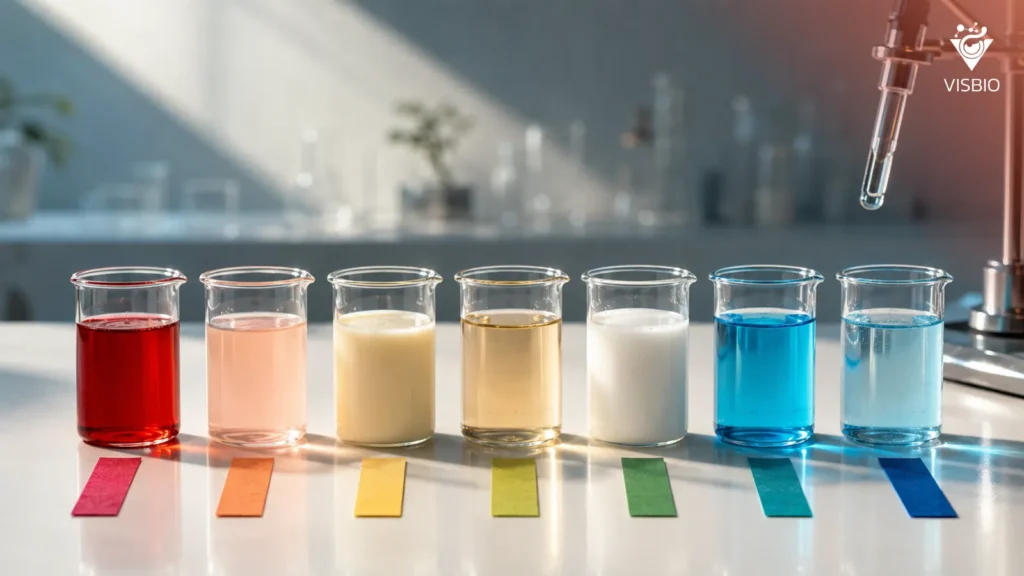
pH results are useful at several stages of a product’s life. In research and development, they are used to select pH adjusters, such as citric acid, lactic acid, sodium hydroxide and triethanolamine, that reach the target pH without affecting other parts of the formula, and to test the effect of changing raw material suppliers, since raw materials from different sources may differ in pH. When selecting the preservative system, they confirm that the formula’s pH is within the range where the chosen preservative works well.
Before launch (pre-launch), pH serves as the baseline for the specification and is used to set acceptable deviation limits for batch release. In commercial production, pH is an easy-to-measure batch release criterion that helps detect deviations in the manufacturing process, especially when raw material suppliers change or production is scaled up. In stability studies, it is used to track changes in pH throughout shelf life under both normal and accelerated conditions. A drifting pH is an early warning that the formulation is starting to degrade, which may lead to problems with product stability or safety.
For export, the results can be attached to the certificate of analysis to support inspections by business buyers in markets where pH is specified in trade agreements.
Frequently asked questions about pH
What is pH?
pH is a number that indicates how acidic or alkaline a solution or the aqueous phase of a product is. It runs from 0 to 14: pH 7 is neutral, below 7 is acidic and above 7 is alkaline. A difference of one unit means a tenfold difference in hydrogen ion concentration.
Why do cosmetics need pH measurement?
pH affects a product’s suitability for the skin, the effectiveness of its preservatives and the stability of emulsions and gels. Human skin generally has a pH of about 4.5–5.5, and weak-acid preservatives work well at low pH. A pH that drifts during storage may therefore make a product more likely to irritate the skin, change its texture or spoil sooner.
How is the pH of a cream or balm measured?
High-fat creams are usually measured by dispersing the sample in deionized water at a set ratio, for example 10% product in 90% water, so that the glass electrode is in contact with the aqueous phase. For medicated balms and other balms that contain no water, the reported pH is that of the sample dispersed or extracted in water.
Why does shampoo give different pH values when measured diluted and undiluted?
Dilution changes the concentrations of acid, base and surfactant in the system, so the values can differ noticeably. The measurement method should match actual use: products used with water should be measured diluted, and products applied directly should be measured undiluted.
How does temperature affect pH?
The pH of solutions containing weak acids and weak bases changes with temperature. Measuring at 30 °C instead of 25 °C can give values that differ by around 0.1–0.2 unit in some formulas, so pH should always be measured at a constant temperature.
What does a pH measurement report include?
The report shows the sample’s pH against the criteria in the specification. For stability studies, it shows the change in pH over time relative to the starting point (T0). Clients can choose a single measurement for batch release or repeated measurements throughout shelf life.
References:
- ASEAN Cosmetic Committee. (2008). ASEAN cosmetic directive. ASEAN Secretariat.
- Royal Thai Government Gazette. (1979, May 13). Food Act B.E. 2522 (1979). Royal Thai Government Gazette, 96(79 Kor), 1–24.
- Royal Thai Government Gazette. (2015, September 8). Cosmetic Act B.E. 2558 (2015). Royal Thai Government Gazette, 132(86 Kor), 1–22.
- Royal Thai Government Gazette. (2019, April 30). Herbal Products Act B.E. 2562 (2019). Royal Thai Government Gazette, 136(56 Kor), 116–161.
- United States Pharmacopeial Convention. (2023). General chapter <791> pH. In United States Pharmacopeia and National Formulary (USP–NF). United States Pharmacopeial Convention.