

Total Phenolic Content (TPC) Testing Service for a Wide Range of Products
VISBIO Co., Ltd. provides total phenolic content (TPC) testing for a wide range of products, including food and beverages, and health and beauty products such as herbal products, dietary supplements and cosmetics. We also test the total phenolic content of herbal raw materials, vegetables and fruits.
Phenolic compounds (Phenolic Acids) are antioxidants that are abundant in foods and natural sources, with more than 8,000 types identified. They are secondary metabolites produced by plants. Phenolic compounds scavenge free radicals, inhibiting the radicals formed in the chain reactions of lipid oxidation, and they trap reactive oxygen and nitrogen species in living systems. They also act through other antioxidant mechanisms, such as chelating iron and copper ions, which would otherwise release highly reactive hydroxyl radicals in the Fenton reaction. Many researchers have reported that phenolic compounds in food benefit health because of their strong antioxidant properties. Phenolic compounds have also been reported to have anti-inflammatory activity, to help protect against ultraviolet damage and to inhibit the formation of carcinogens. They occur in almost every part of the plant, although their types and amounts vary, and they are widely used in food, medicine and cosmetics. Measuring the total phenolic content of a product is therefore important for demonstrating its efficacy and for quality control.
Phenolic Compounds (Phenolic Acids)
Phenolic compounds (phenolics) are important phytochemicals in food plants, where they serve as precursors for the synthesis of the plant’s key compounds. They are stored in the cell vacuoles of different parts of the plant and support each plant’s growth and reproduction. Examples of sources include:
- Dried legumes, such as soybeans and peanuts
- Cereal grains, such as rice and sesame
- Fruits, such as grapes, oranges and santol
- Spices, such as black pepper, chili, ginger, garlic, shallots and onions
- Beverage plants, such as tea and cocoa
- Root crops, such as sweet potatoes
Naturally occurring phenolic compounds are commonly found in the leaves, stems and bark of plants. Examples include gingerol in ginger, eugenol in cloves, lemongrass and holy basil, capsaicin in chili, curcumin in turmeric and catechin in tea. Chemically, phenolic compounds have an aromatic ring bearing one or more hydroxyl groups. This group of compounds attracts considerable research interest because of its antioxidant properties and its potential benefits for health, beauty and medicine.
Classification of Phenolic Compounds
Phenolic compounds are antioxidants that are abundant in foods and natural sources, with more than 8,000 types identified. They are secondary metabolites produced by plants, with hydroxyl groups attached to a benzene ring, and can be classified into the following groups:
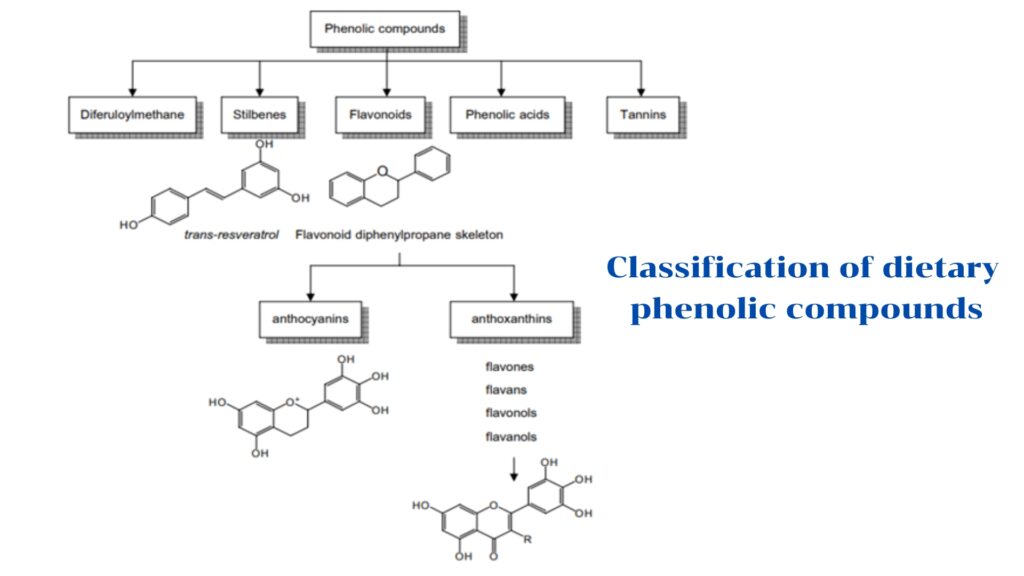
- Phenolic acids: those derived from hydroxybenzoic acids include gallic acid, which is abundant in plants such as myrobalan (Terminalia chebula), grapes, tea, hops and oak bark, while those derived from hydroxycinnamic acid include caffeic, ferulic and coumaric acids. p-Coumaric acid, a hydroxy derivative of cinnamic acid, is the most common isomer in nature and is found in peanuts, carrots, green peppers, strawberries, pineapples, tomatoes and garlic. Its biological activities include inhibiting the oxidation of low-density lipoprotein (LDL).2 Research suggests it may also help reduce the risk of stomach cancer.
- Flavonoids: a large group comprising flavones, isoflavones, flavonols, anthocyanins and flavanols.
- Stilbenes: trans-resveratrol is produced naturally by plants to protect against pathogens, insects and sunlight, and is therefore classed as a phytoalexin. Studies have shown good antioxidant and anti-inflammatory activity in mammalian cells.
- Tannins: phenolic compounds that are common in plants and widely used in leather tanning because they precipitate the proteins in animal hides. Tannic acid is used in antidiarrheal formulations and on skin wounds to help them heal faster, for example in the treatment of burns.
- Other groups include diferuloylmethanes, such as the curcuminoids that are abundant in turmeric, and phenylethanoids such as hydroxytyrosol, which is abundant in olive oil and fruits.
Benefits of Phenolic Compounds
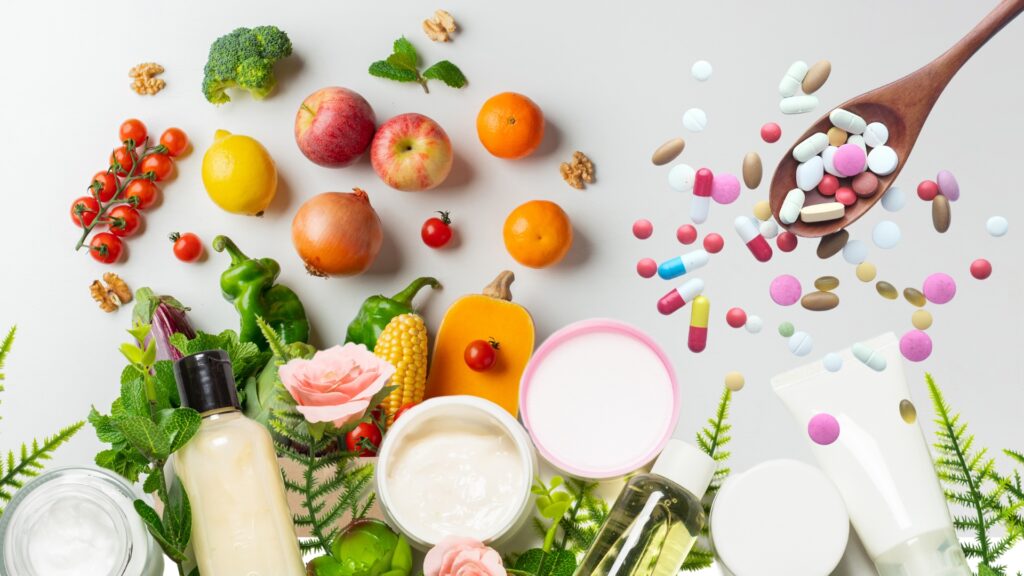
Phenolic compounds are abundant in cereal grains and are effective antioxidants. Insoluble-bound phenolics have the strongest antioxidant capacity, followed by soluble conjugated phenolics and free phenolics. Plant phenolics scavenge free radicals, inhibiting the radicals formed in the chain reactions of lipid oxidation, and they trap reactive oxygen and nitrogen species in living systems. They also chelate iron and copper ions, which would otherwise release highly reactive hydroxyl radicals in the Fenton reaction. Many researchers have reported that phenolic compounds in food benefit health because of their strong antioxidant properties, and they have also been reported to have anti-inflammatory activity, to help protect against ultraviolet damage and to inhibit the formation of carcinogens. Phenolic compounds occur in almost every part of the plant, though their types and amounts vary, and they are widely used in food, medicine and cosmetics.
Extraction of Phenolic Compounds
Phenolic compounds can be extracted from plants and herbs in several ways, for example:
- Solvent extraction Solvents such as ethanol, methanol and acetone are used. The drawbacks are long extraction times and high solvent consumption.
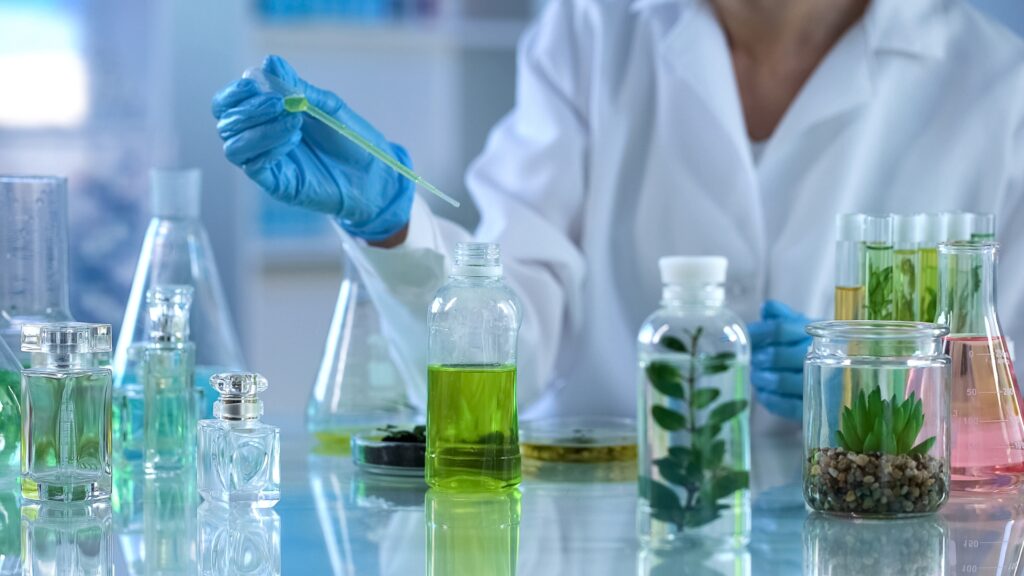
- Supercritical fluid extraction This method gives relatively pure extracts, saves solvent and is suitable for heat-sensitive compounds. Its drawbacks are the high cost of equipment and operation, and because extraction takes place under high pressure, it must be carried out with care.
- Microwave-assisted extraction This technique uses microwaves, a form of electromagnetic radiation, together with organic solvents. The oscillating field makes molecules in the solution rotate and vibrate, generating heat that spreads through the solvent, disrupts the plant tissue and helps dissolve the target compounds. It extracts compounds quickly with little solvent and energy while giving high, efficient yields, making it another option for extracting phenolic compounds. Its efficiency depends on several factors, including time, temperature, microwave power, the properties of the raw material, its moisture content and stability, and the properties of the solvent and the target compounds.
Total Phenolic Content (TPC) Analysis
The analysis of phenolic compounds depends on several factors, such as the types of compounds present, sample particle size, storage conditions, the extraction method, the reference standard used for quantification and any interfering substances in the sample. VISBIO Co., Ltd. tests the total phenolic content (TPC) of all product types using the Folin-Ciocalteu colorimetric method with gallic acid as the reference standard. Samples are measured with a spectrophotometer, and the total phenolic content is calculated from a gallic acid standard curve.
Example of a Total Phenolic Content (TPC) Report
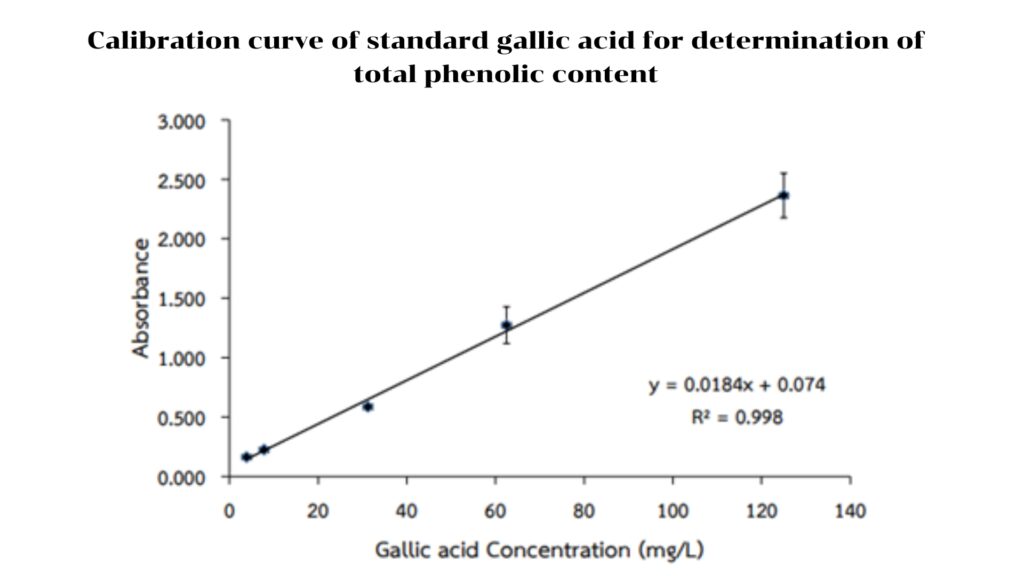
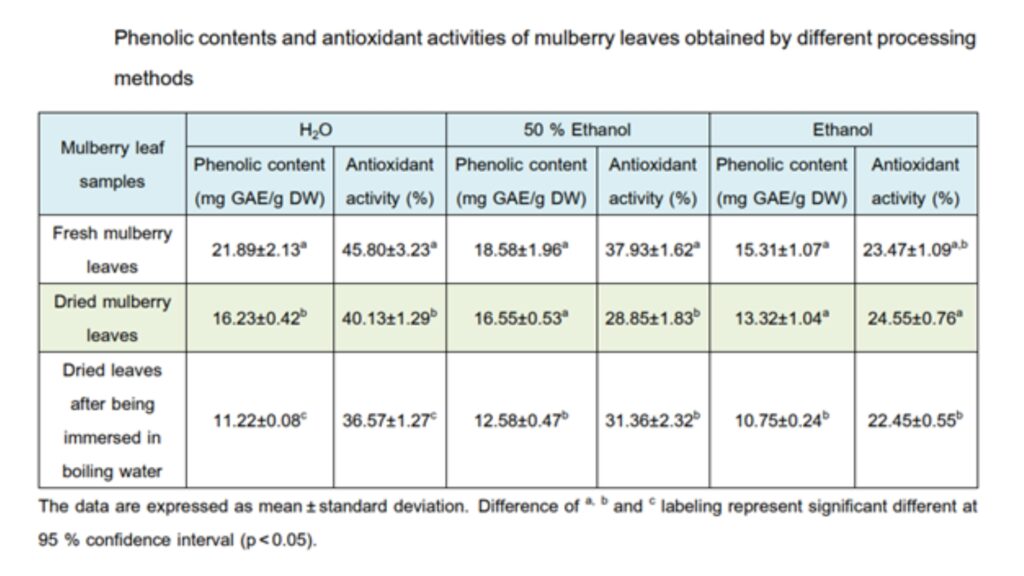
Total phenolic content of mulberry leaf extracts (Thai Journal of Science and Technology, 2020). The study compared three types of mulberry leaves (fresh, dried, and blanched before drying) extracted with water, water and ethanol (1:1 by volume), and ethanol. Fresh mulberry leaves extracted with water gave a total phenolic content of 21.89 mg gallic acid equivalents per gram of dry sample. The water extract of fresh leaves was then made into an instant tea powder by mixing it with maltodextrin and freeze-drying.
Literature:
- กาญจนา นาคประสม, จตุรภัทร วาฤทธิ์ , อุมาพร อุประ, หยาดฝน ทนงการกิจ และ นักรบ นาคประสม, 2560, สภาวะที่เหมาะสมในการสกัดสารประกอบฟีนอลิกรวม จากดอกบัวหลวง โดยใช้เทคนิคสกัดด้วยไมโครเวฟ,ว.วิทย. มข. 45(2) 328-342. (in Thai)
- ณชกนก เมธาอัครเดชา และอนงค์ ศรีโสภา, 2020, ปริมาณฟีนอลิกและฤทธิ์การต้านอนุมูลอิสระ ในชาใบหม่อนและชาผงใบหม่อนชนิดละลายน้ำ, Thai Journal of Science and Technology, Vol. 9 No. 2. (in Thai)
- วลัยพร สินสวัสดิ์, วรรณา ศรีเพ็ชราพร, ประนอม สุขเกื้อ, ชื่นสุมณ ยิ้มถิน, อรุณี ชัยศรีและสิริยากร คล้ายสอน, 2564, การวิเคราะห์สารประกอบฟีนอลิกและความสามารถในการต้านอนุมูลอิสระ ของสารสกัดใบหนานเฉาเหว่ยและใบมะม่วงหาวมะนาวโห่, สวพ. มทร. สุวรรณภูมิ. (in Thai)
- ศรินทร์ ทองธรรมชาติ, สุชนา วานิช และ นงลักษณ์ ศรีแก้ว, 2557, การศึกษาปริมาณฟีนอลิกและฤทธิ์การต้านอนุมูลอิสระจากสารสกัดใบย่านาง, มหาวิทยาลัยราชภัฏมหาสารคาม. (in Thai)
- ลือชัย บุตคุป, 2011, สารประกอบฟีโนลิกและฤทธิ์ทางชีวภาพ, J Sci Technol MSU, Vol 31, No 4, 444-455. (in Thai)