


Sensory evaluation is the systematic use of the human senses, namely sight, smell, taste, touch and hearing, to measure the characteristics of a product and convert the results into numbers that can be analyzed statistically. With a trained sensory panel, the results describe each attribute and rate its intensity consistently, so they can be used to compare formulas, track changes during storage and check batch-to-batch consistency.
In cosmetics, foods and dietary supplements, many sensory attributes, such as skin feel, stickiness, aroma intensity, astringency, bitter aftertaste and mouthfeel, are factors that consumers use when deciding whether to buy again. These attributes cannot be measured with a single instrument, because what consumers perceive arises from the nervous system interpreting several kinds of stimuli at once. Instrument data, such as texture values from a texture analyzer or volatile profiles from GC-MS, are therefore used alongside panel results, not in place of them. Evaluation by a trained panel is the tool that makes it possible to “measure” these attributes as comparable numbers.
This article summarizes what research and development (R&D) teams, marketing teams and brand owners should know before commissioning trained panel testing: the difference between a trained panel and a consumer panel, the points in the product chain where evaluation results can be used, and VISBIO Laboratory’s service process.
How does a trained panel differ from a consumer panel?
Sensory evaluation follows two different approaches, depending on the purpose. A trained sensory panel is used to “describe” and “measure” product attributes objectively. Trained assessors are developed to discriminate well between samples, to describe attributes with a standard vocabulary and to rate the intensity of each attribute consistently. The results are used to compare formulas in research and development, to track changes throughout shelf life in stability studies, and as supporting data for claims about sensory attributes.
A consumer panel is used to measure “liking” and “purchase intent” subjectively. The panelists are consumers selected to represent the target group; they are not trained and rate products according to their personal feelings. The results are used for marketing decisions and do not replace a trained panel in describing product attributes. Good planning therefore requires understanding the purpose of each approach and choosing the tool that fits the question to be answered. The service on this page is a trained sensory panel for research and development, stability studies and quality assurance. For satisfaction testing with target consumers, see our consumer satisfaction testing service.
| Item | Trained sensory panel | Consumer panel |
|---|---|---|
| Purpose | Describe attributes and measure their intensity | Measure liking and purchase intent |
| Panelists | Screened and trained, using a standard vocabulary | Consumers representing the target group, not trained |
| Nature of the results | Objective, comparable between formulas and over time | Subjective, reflecting personal feelings |
| Used for | Comparing formulas, tracking stability, checking batch-to-batch consistency | Marketing decisions |
Where in the product chain can trained sensory panel results be used?
A trained sensory panel is a tool that can be used at several points in the product chain:
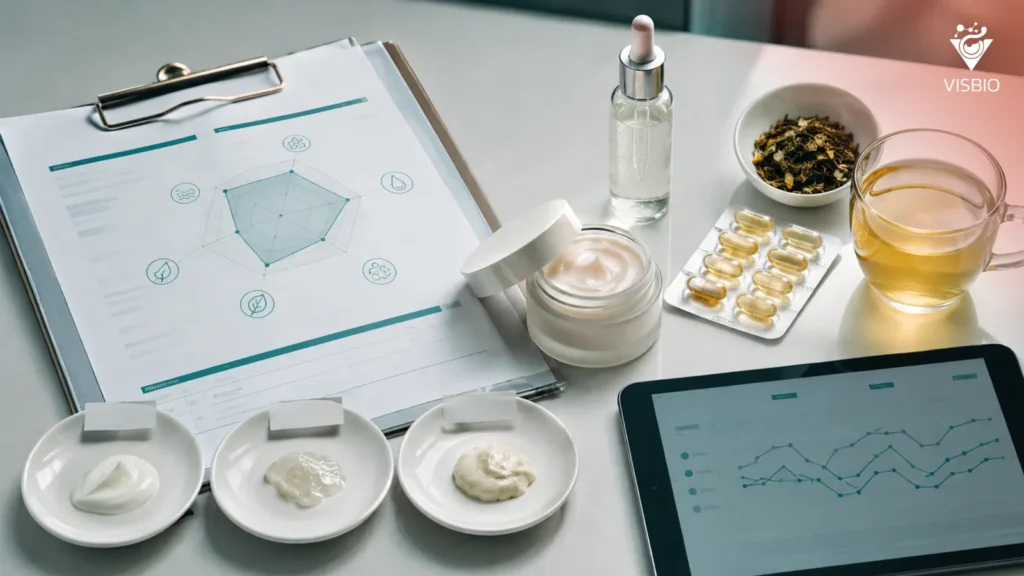
- Research and development: to compare formulas and select the one closest to the target profile, to compare against competing products on the market (benchmarking), and to analyze the profile of a reference product to set it as the formulation target
- Stability studies: to track sensory changes caused by antioxidant degradation, the Maillard reaction, texture drift in cosmetics and oxidative off-notes in oil-containing products
- Quality assurance: to check lot-to-lot consistency, which matters for brands positioned as premium products and for brands sold in export markets
- Marketing: as supporting data for claims about sensory attributes, such as “lightweight texture”, “fast-absorbing”, “non-sticky” and “no bitter aftertaste”
These claims need verifiable evidence, not the opinions of the brand’s internal team. In the European Union, for example, cosmetic claims must meet common criteria, which include adequate and verifiable supporting evidence (European Commission, 2013). The evidence may come from a trained panel, consumer testing or instrumental measurement, depending on the nature of the claim. Trained panel results suit claims that directly describe product attributes, such as stickiness or bitterness.
VISBIO Laboratory's trained sensory panel service
VISBIO Laboratory provides evaluation by trained assessors, screening and training them against defined criteria and choosing evaluation techniques that suit the purpose of each project. The panel selection system does not overlap with the client’s staff, and the assessors are kept separate from formulation and production. The evaluation results can therefore be used as supporting data for marketing claims, including communication with trading houses and key accounts in export markets.
The service process is as follows:
- Design a sensory test plan aligned with the brand’s commercial objectives
- Screen and train assessors against the criteria
- Develop a sensory vocabulary specific to the product category
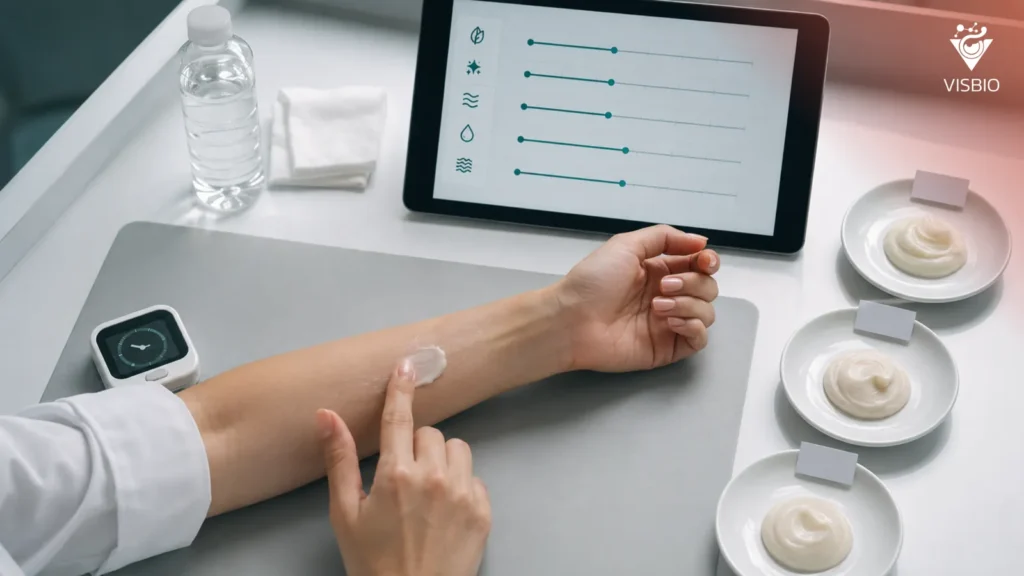
- Conduct the evaluation in rooms with controlled conditions (sensory booths)
- Analyze the results statistically
- Report results that connect the statistical figures to commercial conclusions that support the next decision
Frequently asked questions about sensory evaluation
What is sensory evaluation?
Sensory evaluation is the systematic use of the human senses to measure product characteristics, such as scent, taste, skin feel and texture, and to convert the results into numbers that can be analyzed statistically.
How does a trained panel differ from a consumer panel?
A trained panel consists of trained assessors who describe attributes and measure their intensity objectively. A consumer panel consists of consumers representing the target group, who indicate liking and purchase intent subjectively. The two answer different questions and cannot replace each other.
Why use human assessors when instruments are available?
What consumers perceive, such as skin feel, astringency or mouthfeel, arises from the nervous system interpreting several kinds of stimuli at once, so a single instrument cannot measure it completely. Instrument data are therefore used together with results from trained assessors.
What can a trained sensory panel be used for?
It can be used to compare formulas and benchmark against competing products in research and development, to track sensory changes during stability studies, to check batch-to-batch consistency in quality assurance, and as supporting data for marketing claims.
Can trained panel results support marketing claims?
Yes, especially claims that directly describe product attributes, such as lightweight texture, non-sticky or no bitter aftertaste. Every claim, however, needs verifiable evidence, which may come from trained assessors, consumer testing or instrumental measurement, depending on the nature of the claim.
What are the steps of VISBIO Laboratory’s service?
The service starts with designing the test plan, then screening and training assessors, developing a sensory vocabulary, evaluating in rooms with controlled conditions, analyzing the results statistically, and reporting results that connect the numbers to commercial conclusions.
References:
- European Commission. (2013). Commission Regulation (EU) No 655/2013 of 10 July 2013 laying down common criteria for the justification of claims used in relation to cosmetic products. Official Journal of the European Union, L 190, 31–34.