Behind the Certificate of Analysis
Consumers now have information at their fingertips, and competition in health and beauty is intense. The question global brand owners face is no longer just “How good is your product?” but “What proves that it is good?” That is why international brands invest in third-party lab testing, even though the manufacturer already provides preliminary results.
The short answer is verifiable transparency. This article takes you behind the laboratory to show the scientific process behind a credible COA: what a test report is, how reference standards work, and why information from the brand owner is central to the accuracy of the results.
What Is Third-Party Lab Testing?
Third-party lab testing means sending product or raw material samples to a laboratory that is not part of the manufacturer or the brand. This independence means the results do not depend on the interests of either side, which is why partners and buyers give more weight to independent results than to the manufacturer’s own testing.
In dietary supplements, cosmetics and extracts, independent testing is often used to confirm the content of key compounds (sometimes called potency testing), to verify raw materials from a new supplier, and to give the manufacturer the data it needs to issue a COA. This is why “third party testing supplements” is one of the most common searches in this field.
What Is a Test Report, and How Is It Different from a COA?
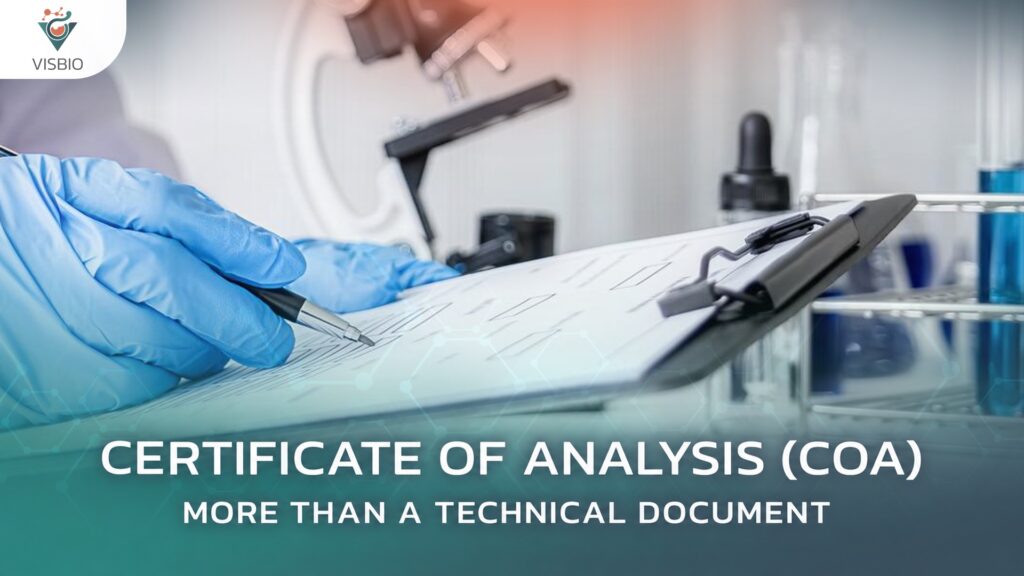
A test report is the document a laboratory issues after analyzing a sample. It states the results for the sample received, using the methods applied. A COA is the document the manufacturer issues to certify that the whole lot meets its criteria. The test report is the scientific evidence; the COA is the quality certification that relies on it.
A good lab test report usually includes:
- Sample information: the name and description of the sample, the lot number provided by the sender, and the date received.
- Tests and methods: for example, key compound content by HPLC, with the reference standard used.
- Results: values with units and, where relevant, the limit of quantification (LOQ).
- Traceability: the report number, the analyst, the reviewer and the date of issue.
- Scope of the results: a statement that the results apply only to the sample received.
The last point matters. Because a test report reflects only the sample that was sent, collecting a sample that represents the whole lot is the responsibility of the manufacturer or brand owner, as explained in the section on sending samples below.
Reference Standards: The “Ruler” That Judges Quality
At Visbio, reliable analysis depends on reference standards, also called standard markers. Imagine you are making a ruler. How do you know that the 1-centimeter mark really matches the global standard? You need a master ruler to compare against. A reference standard plays the same role in the lab. It is a high-purity substance of very high value (gram for gram, some cost many times more than gold) that we use as a “chemical ruler” to compare against your product.
Reference standards come in levels. A primary reference standard is a high-purity substance certified by a recognized body or producer. A secondary, or working, standard is calibrated against a primary standard. A good reference standard comes with its own certificate of purity and lot number, which makes the measured results traceable.
The key question is how the laboratory knows which reference standard to use. This is where collaboration between the brand owner and the lab begins. The answer does not come from guesswork. It comes from the documents you send us: the COI (Certificate of Ingredients), the COA (Certificate of Analysis) or the MSDS (Material Safety Data Sheet).
The composition data in these documents is a chemical blueprint. In a Cordyceps extract, do you want Cordycepin measured? In a Centella asiatica extract, do you need Madecassoside? Once the target is clear, we use the reference standard as the starting point and quantify that compound in your product accurately. Without this information, the analysis can become a search for a needle in a haystack, which directly affects the credibility of your brand.
Who Does What in the COA Process?
To give your brand maximum credibility and international acceptance, the roles must be clearly separated (segregation of duties) to prevent conflicts of interest:
- The manufacturer is the quality certifier. The factory issues the COA for each production lot, because it holds all the key information: the lot number, production quantity, manufacturing date and expiry date.
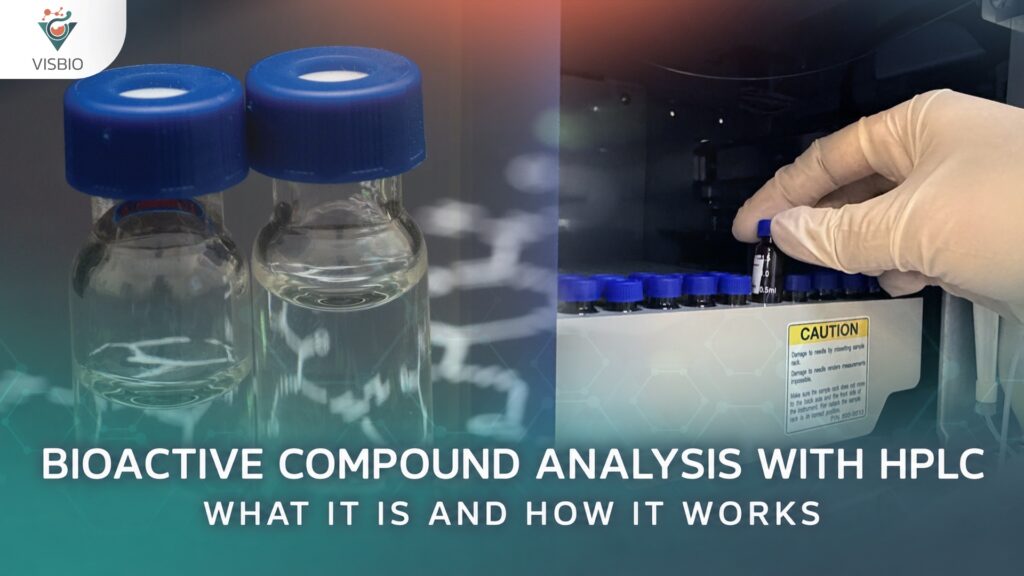
- Visbio is the neutral scientific witness. We do not issue your COA. We issue a Test Report, produced by separating and analyzing your sample by HPLC (High-Performance Liquid Chromatography), an advanced technique for separating chemical compounds, to obtain objective numerical results.
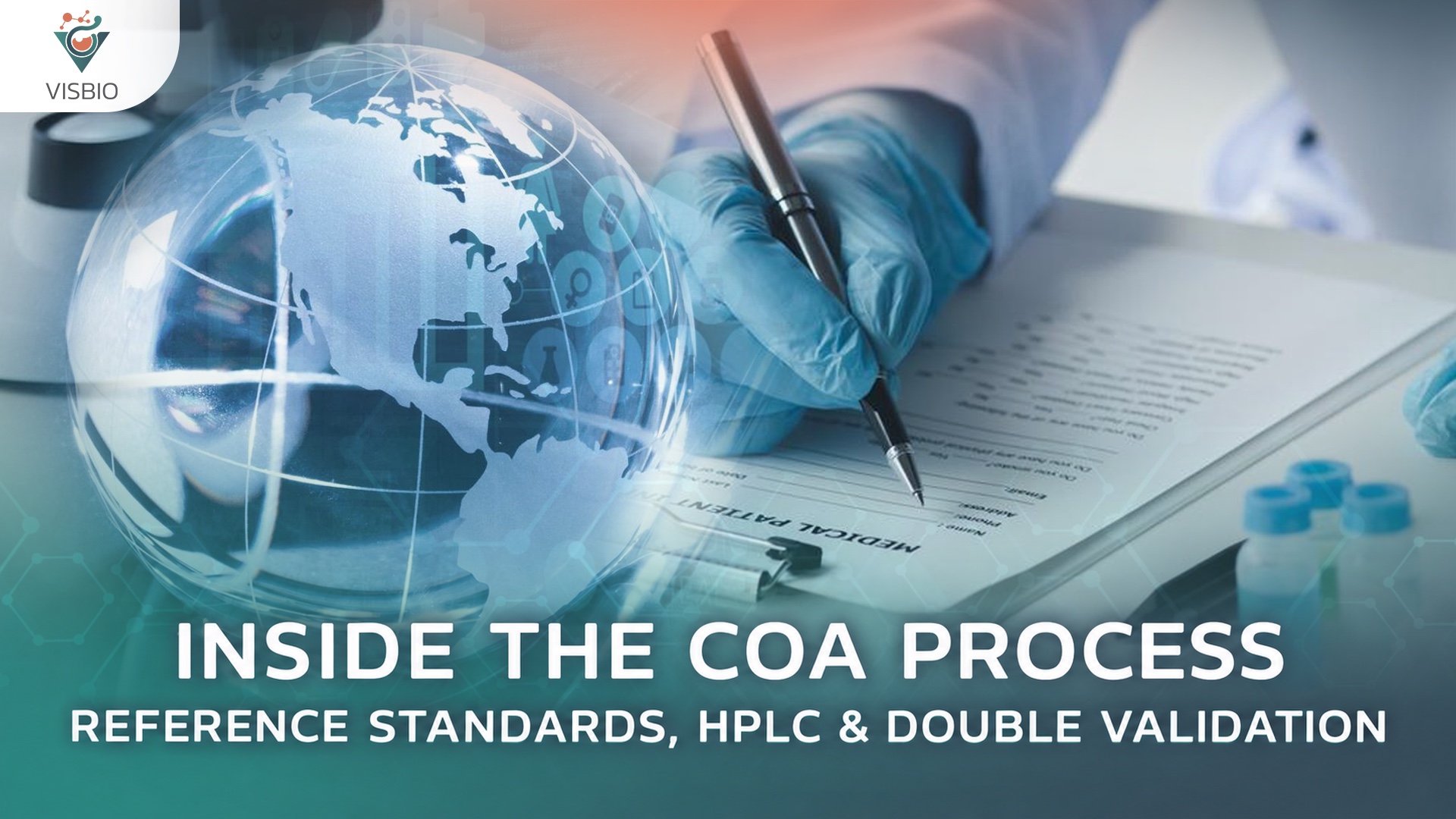
- The synergy: Double Validation. When you attach the independent Test Report from Visbio to the manufacturer’s COA, you create two layers of validation. This gives buyers, regulators such as the Thai FDA, and customs authorities abroad stronger evidence of your product’s quality, because it is certified by the manufacturer and confirmed by an independent laboratory.
The Professional Roadmap: 5 Steps to a Credible COA
There are no shortcuts to a standard the world accepts. These are the five steps a professional brand owner takes with us:
- Preparation: The first step is sending information, not samples. Gather the documents from your manufacturer so we can review the key components in detail, identify the hero compound of your product and check for substances that may interfere with the measurement.
- Scientific consultation: Our specialists go through the documents with you to choose the markers that best fit your product and your market. For example, if you plan to export to Europe, the reference standards used should be internationally recognized.
- Analysis: Our scientists prepare the sample, which can be complex depending on the sample type, before running it on the HPLC to separate the molecules and compare them with the selected reference standards, using a validated method. This step turns a liquid or powder in a bottle into chromatograms and figures that show the concentration precisely.
- Verification: The data from the instrument is cross-checked by specialists before we issue the Test Report. The report reflects a laboratory that stays true to its results.
- Final COA: You send the Test Report to your manufacturer, who enters these verified values into the official COA. The result is a COA grounded in scientific evidence.
Sending Samples That Represent the Whole Lot
Because test results reflect only the sample that was sent, how the sample is collected and shipped directly affects what the results mean:
- Take the sample from the lot you want to certify and label the container clearly with the lot number.
- For large lots, sample from several points or several packs, following the manufacturer’s sampling plan.
- Send enough material for the tests and any repeat testing. Ask our team how much is needed before shipping.
- Keep a retained sample from the same lot at the manufacturer in case results need to be confirmed later.
- Pack and ship under suitable conditions, such as protection from light or moisture, or temperature control for sensitive materials.
What Can a Third-Party Lab Test for Your COA?
A single COA may list many tests, and laboratories specialize in different areas. Visbio focuses on the content of key compounds by HPLC and other quantitative methods, for example:
- Key compounds in herbal extracts, such as curcuminoids in turmeric and andrographolide in Andrographis paniculata.
- Vitamins in dietary supplements, such as vitamin C.
- Key ingredients in cosmetics.
- Terpene profiles in cannabis extracts by GC.
Other COA items, such as microbiological limits or heavy metals, use specialized test methods. Ask our team which items we can cover. See the full list in Bioactive compound analysis (HPLC).
Why Third-Party Lab Testing Is Worth the Investment
Sending samples to an independent laboratory such as Visbio is not a cost. It is an investment in trust.
- Added value: Brands that show results from an independent laboratory come across as more transparent and more premium than their competitors.
- Long-term safety: It helps prevent over-claiming active ingredient content, which can lead to legal problems later.
- Access to global markets: Results referenced to internationally recognized standards make it easier to list your products with leading retailers and to export.
Frequently Asked Questions About COA Testing
What is a third-party lab?
An independent laboratory that is not part of the manufacturer or the brand, so its results are neutral and carry more weight with buyers and partners.
What is a test report?
The report a laboratory issues after analyzing a sample, stating the test methods, the results with units, and the details needed to trace them.
Can a test report replace a COA?
No. A test report covers the sample tested, while a COA certifies a whole lot and is issued by the manufacturer. The manufacturer refers to the test report when issuing the COA, and many buyers ask to see the test report as supporting evidence.
What is a reference standard, and why is it needed?
A high-purity substance of known value, used as the point of comparison to identify a compound and calculate its amount. Without the right reference standard, results cannot be trusted.
How much sample should I send?
It depends on the tests and the type of sample. Ask our team before shipping, so there is enough for the tests and any repeat testing.
How long does testing take?
It depends on whether a method already exists for that type of sample, whether reference standards need to be ordered, and the number of samples. Our team will give an estimate after reviewing your details.
Conclusion
At Visbio, we are not just an inspector. We are an honest scientific witness who helps turn your research and hard work into lasting consumer trust. Because scientific truth is the most solid foundation for your business.
Related reading
Need assay results to support a COA or Test Report?
VISBIO analyzes bioactive and marker compounds in raw materials, extracts and finished products using HPLC and other quantitative methods, with results reported in a Test Report.
Talk to our team before sending samples: LINE @visbio · Contact us